

Tobacco and Cigar Production in Cuba
Cuba remains among the most celebrated tobacco-producing nations on earth. The island's unique combination of climate, soil composition, and centuries of agricultural expertise produces a leaf that is widely regarded as unrivaled. From the careful selection of seeds to the final quality inspection of a finished cigar, every step in the Cuban cigar-making process reflects generations of accumulated knowledge and tradition.
Geography and Growing Regions
Cuba is the largest island in the Caribbean, covering 109,884 square kilometers with a population of approximately 11.33 million. Spanish is the primary language, and tobacco ranks as the country's third-largest export sector.
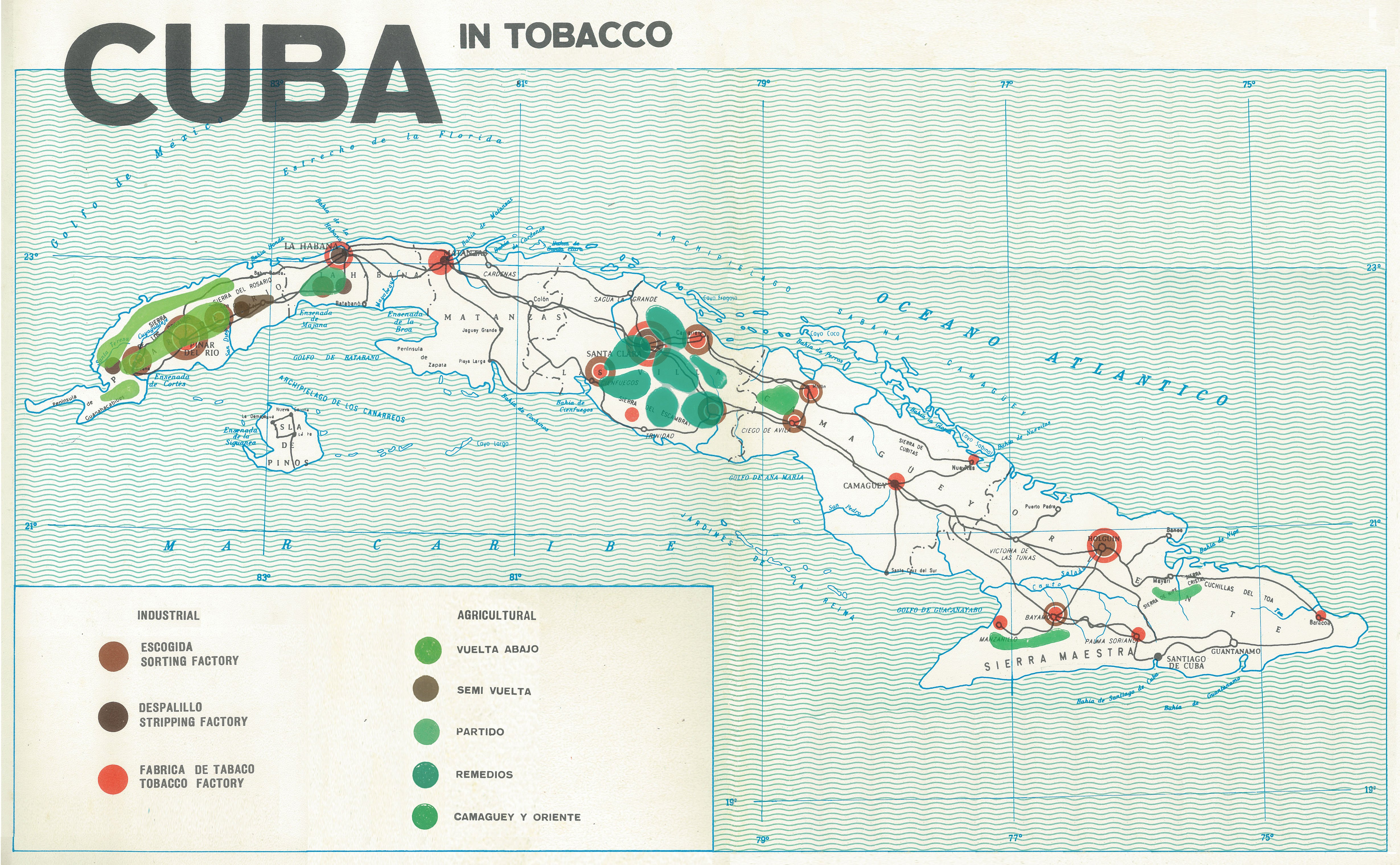
The island is divided into several provinces, each contributing differently to tobacco cultivation. The most significant regions for Habanos tobacco are:
- Vuelta Abajo -- Located in the western Pinar del Rio province, this is the premier tobacco-growing zone. It is the sole region capable of producing every category of cigar leaf. Fewer than a quarter of its tobacco-growing acres qualify for the coveted Vegas Finas de Primera designation required for Habanos production. The small town of San Luis sits at the heart of this area, renowned above all for its wrapper-leaf cultivation.
- Semi Vuelta -- Also in the western tobacco heartland, this region contributes wrapper leaves, though the area dedicated to Habanos-grade tobacco represents barely one percent of its total production land. The bulk of Semi Vuelta's crop goes toward other purposes.
- Vuelta Arriba -- Home to the Remedios growing areas, this region supplies all leaf types for the Jose L. Piedra brand. Its distinctive soil and microclimate yield tobacco with a unique character, though growers employ the same cultivation techniques found elsewhere on the island.
- Partido -- Another zone that specializes in producing high-quality wrapper leaves.
The Tobacco Plant
Tobacco is indigenous to Cuba and was cultivated by native peoples long before European contact. After centuries of commercialization and cross-breeding with non-native strains, the original Cuban black tobacco (Tabaco Negro Cubano) lost much of its distinctive flavor. In 1907, Cuban botanists created the Habanensis varietal, which restored the characteristic Cuban taste while adding disease resistance. This variety is the ancestor of all modern Cuban tobacco.
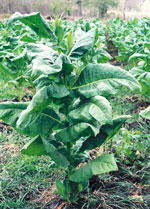
Subsequent improvements include the Criollo strain (developed around 1940) and its sub-variety Corojo, created specifically for wrapper leaf. Habana 2000 arrived in 1992, followed by Criollo 98 in 1998. The Habano 2006 variety (a cross between Habana 2000 and Criollo 98) entered service for the 2006/07 growing season. More recently, Criollo 2010 and Corojo 2012 were developed, entering widespread use in 2015 and 2017 respectively.
Cuba's Tobacco Research Institute continually refines these varieties, prioritizing pest and disease resistance along with higher yields. Flavor and combustion characteristics are secondary objectives, typically fine-tuned in the seasons following a new variety's introduction. Most modern varietals do not flower.
Shade-Grown Tobacco
Plants destined for wrapper leaf are cultivated beneath muslin canopies that filter sunlight and trap warmth. This environment encourages the growth of broader, thinner leaves with a finer texture. Only the most flawless leaves earn selection as Habanos wrappers, making this the costliest leaf to produce. Color varies progressively with height: lower leaves are lighter, while upper leaves -- used in Limited Editions and the Cohiba Maduro line -- are markedly darker.
Sun-Grown Tobacco
Open-field plants cultivated under full sun supply the inner leaves of a cigar. These are thicker and more intensely flavored than their shade-grown counterparts. Sun-grown leaves are classified according to their position on the stalk:
| Leaf Type | Position | Strength | Role in the Cigar |
|---|---|---|---|
| Volado | Lowest leaves | Fortaleza 1 | Lighter filler and binder; prized for combustibility |
| Seco | Middle leaves | Fortaleza 2 | Medium filler; primary source of aroma |
| Ligero | Upper leaves | Fortaleza 3 | Full-bodied filler; adds strength and slow burn |
| Medio Tiempo | Topmost small leaves | Fortaleza 4 | Strongest leaf; used sparingly in select premium cigars |
All cigars incorporate at least some Volado and Seco. Only larger ring gauge, more powerful blends incorporate Ligero. Medio Tiempo leaves are left on the plant for an extended period after the other leaves have been gathered, and they require specialized fermentation methods.
The Annual Growing Cycle
Premium Habanos tobacco follows a single annual crop cycle spanning roughly nine months from soil preparation through the end of harvest. The process demands extensive irrigation and constant vigilance.
Seed and Seedling Production: Cuba's Tobacco Research Institute oversees seed distribution, providing seedlings free of charge to farmers (known as Vegueros). The Institute determines annual planting strategies, including variety allocations and total area. Seedlings germinate in soil-filled plastic trays floating on a hydroponic-style nutrient solution within enclosed plastic structures. After 45 to 50 days, they are ready for transplanting.
Soil Preparation: Fieldwork traditionally begins on September 15 each year. In premium tobacco zones, farmers still favor ox-drawn plows, although mechanized equipment is available when fuel supplies permit. Organic fertilizers enrich the soil.
Planting and Tending: Seedlings are set into prepared soil by hand at a density of approximately 30,000 per hectare. Three to four weeks later, earth is banked around each plant's base to strengthen the root system. Once a plant reaches the desired height, its top bud is removed to encourage leaf development, which in turn triggers unwanted side growth that must be cleared every few days. Fields intended for wrapper leaf are draped under muslin canopies within 10 to 20 days of planting.
Harvesting: The 30-day harvest window opens about 40 days after planting. Leaves are removed from the bottom upward, with a gap of roughly three days between each picking stage. Shade-grown wrappers are gathered in eight stages; sun-grown filler in five. The lightest leaves come first, with color and strength increasing toward the crown of the plant.
Curing, Fermentation, and Aging
Curing: Harvested leaves are sorted into bundles and hung to dry. Wrappers undergo approximately 50 days of air-drying in dedicated curing barns. Filler leaf follows a similar air-drying schedule but includes 5 to 7 days of open sun exposure both before and after the barn phase.
Sorting and Fermentation: Wrapper leaves are moistened, sorted by size and color, graded for quality, bundled in jute cloth, and rested for 10 to 15 days before baling. Filler and binder leaves undergo a similar initial sort, then are stacked into piles for a 30- to 50-day fermentation. Temperature within each pile is carefully monitored. After fermentation, filler leaves are stripped of their central vein, packed, baled, and placed in storage rooms for aging. Fermentation reduces acidity, tar, and nicotine while smoothing flavor and evening out wrapper color.
Aging Requirements (from 2006):
- Ligero filler -- minimum 3 years
- Seco filler -- minimum 2 years
- Volado filler -- minimum 1 year
- Binders -- generally 1 year
- Standard wrappers -- generally 1 year
- Limited Edition wrappers -- minimum 2 years
- Cohiba Maduro wrappers -- minimum 5 years
Cigar Rolling and Construction
Handmade Long-Filler Cigars (Totalmente a Mano, Tripa Larga)
The roller (Torcedora) begins by laying out a binder leaf -- typically a light or neutral-flavored leaf, often a rejected wrapper or Volado. Full-length filler leaves are gathered, folded, and rolled into a tube with lighter tips toward the foot and the stronger, slower-burning Ligero at the center. The bunch is then wrapped onto the binder starting from the foot, trimmed at the head, and pressed in a wooden mold to achieve its shape.
Every cigar is subjected to a suction draw test (a practice introduced around 2002, initially on random samples, now universal) before the wrapper is applied. The wrapper is prepared smooth-side out, trimmed along its exposed edge, and rolled onto the bunch from foot to head. A small piece of wrapper forms the cap, which is glued over the head. A final guillotine cut brings the cigar to its specified length.
Other Production Methods
Handmade Short-Filler (Totalmente a Mano, Tripa Corta): These cigars use chopped leaf trimmings and selected tobacco as filler, but retain full-size binders and wrappers. A few short-filler vitolas remain in the Habanos portfolio today.
Machine-Made (Mecanizado): Produced from the 1950s onward using either long or short filler, machine-made cigars were phased out of the Habanos range between 2002 and 2005. They continue to be manufactured in Cuba by Internacional Cubana de Tabacos S.A. but are no longer classified as Habanos.
Fumigation, Freezing, and Quality Control
Before packing, cigars are fumigated with Phosphine to combat the tobacco beetle (Lasioderma serricorne) and then conditioned in cedar-lined cabinets maintained between 16 and 18 degrees Celsius at 65 to 70 percent relative humidity. Since early 2005, finished cigars are also frozen at the Habanos facility in Guanabacoa to eliminate all remaining eggs, larvae, and insects.
Quality control is rigorous and multi-layered. Expert supervisors -- themselves skilled rollers -- monitor technique, construction, and physical dimensions at the rolling tables. After rolling, every cigar is inspected for weight, length, ring gauge, consistency, and appearance. Sample cigars are dissected to verify internal filler arrangement, and additional samples are test-smoked to confirm draw, burn, aroma, flavor, strength, and overall character.
Major Cuban Cigar Factories
| Factory | Location | Mother Factory For |
|---|---|---|
| El Laguito | Havana (Cubanacon) | Cohiba |
| Partagas (Francisco Perez German) | Central Havana | Partagas, Bolivar, La Gloria Cubana, Ramon Allones, Quai d'Orsay |
| H. Upmann (Jose Marti) | Central Havana | H. Upmann, Montecristo, Diplomaticos |
| La Corona (Miguel Fernandez Roig) | Havana (Cerro) | Hoyo de Monterrey, Punch, San Cristobal, La Flor de Cano, Cuaba, Por Larranaga |
| Romeo y Julieta (formerly Carlos Balino) | Havana suburbs | Romeo y Julieta, El Rey del Mundo, Saint Luis Rey |
| Francisco Donatien | Pinar del Rio | Vegueros, Trinidad, Vegas Robaina |
| Holguin | Holguin | Jose L. Piedra |
| Cienfuegos | Cienfuegos | Quintero |
Since a 2002 policy change, any factory can produce any brand, but each brand's designated mother factory controls tobacco selection and blend formulation regardless of where the cigars are physically rolled. Additional provincial factories across the island handle overflow production of high-volume vitolas under the supervision of the relevant mother factory.