

What Is a Humidor? — The Complete Guide to Cigar Storage
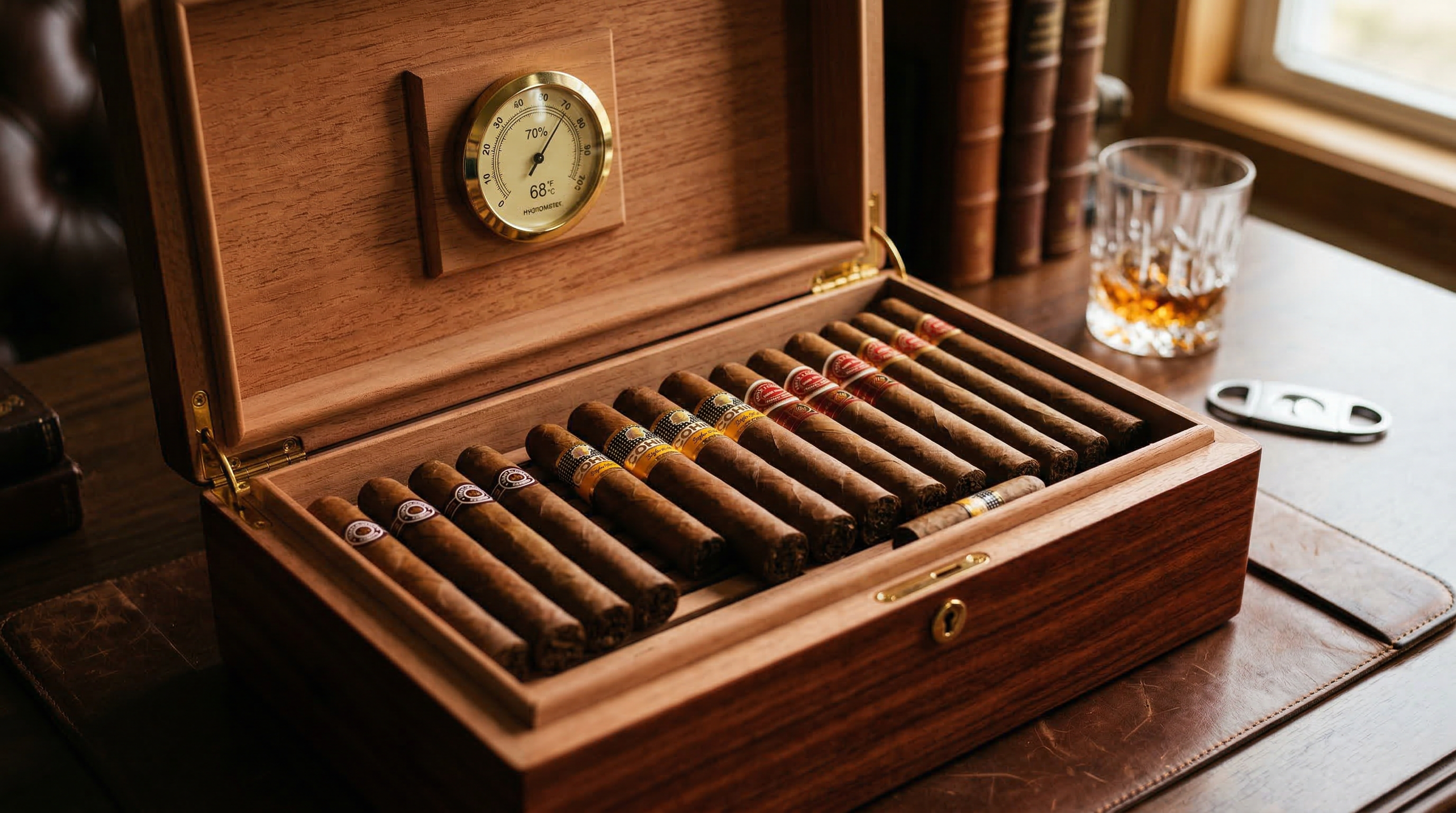
A humidor is a specially designed storage container that maintains a controlled level of humidity and temperature to preserve cigars in optimal smoking condition. Without proper storage, cigars will dry out within days, losing their essential oils, flavor, and aroma — or conversely, become too moist and develop mold or cause an unpleasant, uneven burn. For anyone who invests in quality Cuban cigars, a humidor is not a luxury — it is a necessity.
Why You Need a Humidor
Cuban cigars are handmade from natural tobacco leaves that are hygroscopic — meaning they constantly absorb and release moisture from their environment. When stored without humidity control, cigars undergo irreversible damage:
- Too dry (below 60% RH) — Wrapper leaves crack and split, essential oils evaporate, and the cigar burns hot and harsh with diminished flavor.
- Too moist (above 75% RH) — Cigars become spongy, difficult to draw, prone to mold, and may develop tobacco beetles that destroy entire collections.
- Ideal range (65–72% RH at 65–70°F / 18–21°C) — Cigars remain supple, flavorful, and age gracefully over months or years.
A quality humidor maintains this sweet spot consistently, protecting your investment and ensuring every cigar smokes exactly as the blender intended.
Types of Humidors
Desktop Humidors
The most common type, desktop humidors typically hold 25 to 100 cigars. They are made of wood — usually lined with Spanish cedar — and feature a tight-sealing lid with a humidification device and hygrometer. Desktop humidors range from affordable starter models around $50 to handcrafted luxury pieces costing several hundred dollars. For most cigar enthusiasts, a well-made desktop humidor is all that is needed.
Travel Humidors
Designed for portability, travel humidors are compact, crush-proof cases that typically hold 3 to 10 cigars. They are made from hard plastic, leather, or metal with airtight seals and a small humidification element. Essential for vacations, business trips, or simply carrying your daily smokes without risking damage.
Cabinet Humidors
For serious collectors, cabinet humidors are freestanding furniture-grade pieces that store 500 to 5,000+ cigars. These large units often feature multiple shelves, drawers, and sophisticated electronic humidity control systems. Cabinet humidors are ideal for aging collections over extended periods and serve as impressive display pieces.
Electronic / Thermoelectric Humidors
Modern electronic humidors use thermoelectric cooling and digital humidification systems to maintain precise temperature and humidity levels. They eliminate the guesswork of manual humidification and are especially useful in climates with extreme heat or dryness. Brands like Newair and Whynter offer cigar coolers in various sizes, from 250 to 1,500 cigars.
The Importance of Cedar Lining
Spanish cedar (Cedrela odorata) is the wood of choice for humidor interiors, and for good reason:
- It absorbs and releases moisture evenly, acting as a natural humidity buffer.
- Its aromatic oils complement and enhance the flavor of aging cigars.
- Spanish cedar naturally repels tobacco beetles and other insects.
- It resists warping and mold better than other woods when exposed to sustained humidity.
Never store cigars in a humidor lined with ordinary wood, as it may impart unwanted flavors or fail to regulate moisture properly.
How to Season a New Humidor
A brand-new humidor must be seasoned before use. The dry cedar interior will absorb moisture from your cigars unless it is properly hydrated first. Follow these steps:
- Wipe the interior — Using a clean, lint-free cloth dampened with distilled water, gently wipe all cedar surfaces (walls, lid, dividers, trays). Do not soak the wood.
- Place a humidification source — Set a dish of distilled water or a pre-charged humidification device inside the empty humidor. Close the lid.
- Wait 24–48 hours — Check the hygrometer. When the humidity stabilizes at 65–72%, the humidor is ready.
- Repeat if necessary — In very dry climates, you may need to wipe the interior a second time and wait another day.
- Add your cigars — Once seasoned, load your cigars and monitor the humidity for the first week, adjusting the humidification element as needed.
Always use distilled water — tap water contains minerals and chemicals that can clog humidification devices and promote mold growth.
Humidification Devices
Several types of humidification elements can be used inside a humidor:
- Boveda packs — Pre-calibrated two-way humidity packs (available in 65%, 69%, 72% RH). The simplest, most reliable option — just place them inside and replace every 2–4 months.
- Gel crystals / beads — Silica-based beads that absorb or release moisture to maintain a target humidity. Recharged with distilled water.
- Foam-based humidifiers — Green foam pucks or bars that hold distilled water. Inexpensive but less precise and prone to mold if not maintained.
- Electronic humidifiers — Battery or power-operated devices that actively regulate humidity. Best for large cabinet humidors.
Best Humidors for Beginners
If you are just starting your Cuban cigar journey, look for these qualities in your first humidor:
- Capacity of 25–50 cigars — Large enough to hold a respectable collection but small enough to maintain easily.
- Spanish cedar lining — Non-negotiable for proper cigar storage.
- Quality seal — The lid should close with a satisfying "whoosh" of air, indicating a tight seal.
- Built-in hygrometer — A digital hygrometer is preferable to analog for accuracy.
- Budget $50–$150 — Avoid the cheapest options that often have poor seals, and you don't need to spend $500 to start.
Pair your humidor with Boveda 69% packs for worry-free maintenance, and always store your humidor away from direct sunlight and heat sources. With proper care, a quality humidor will protect and enhance your Cuban cigars for decades.