
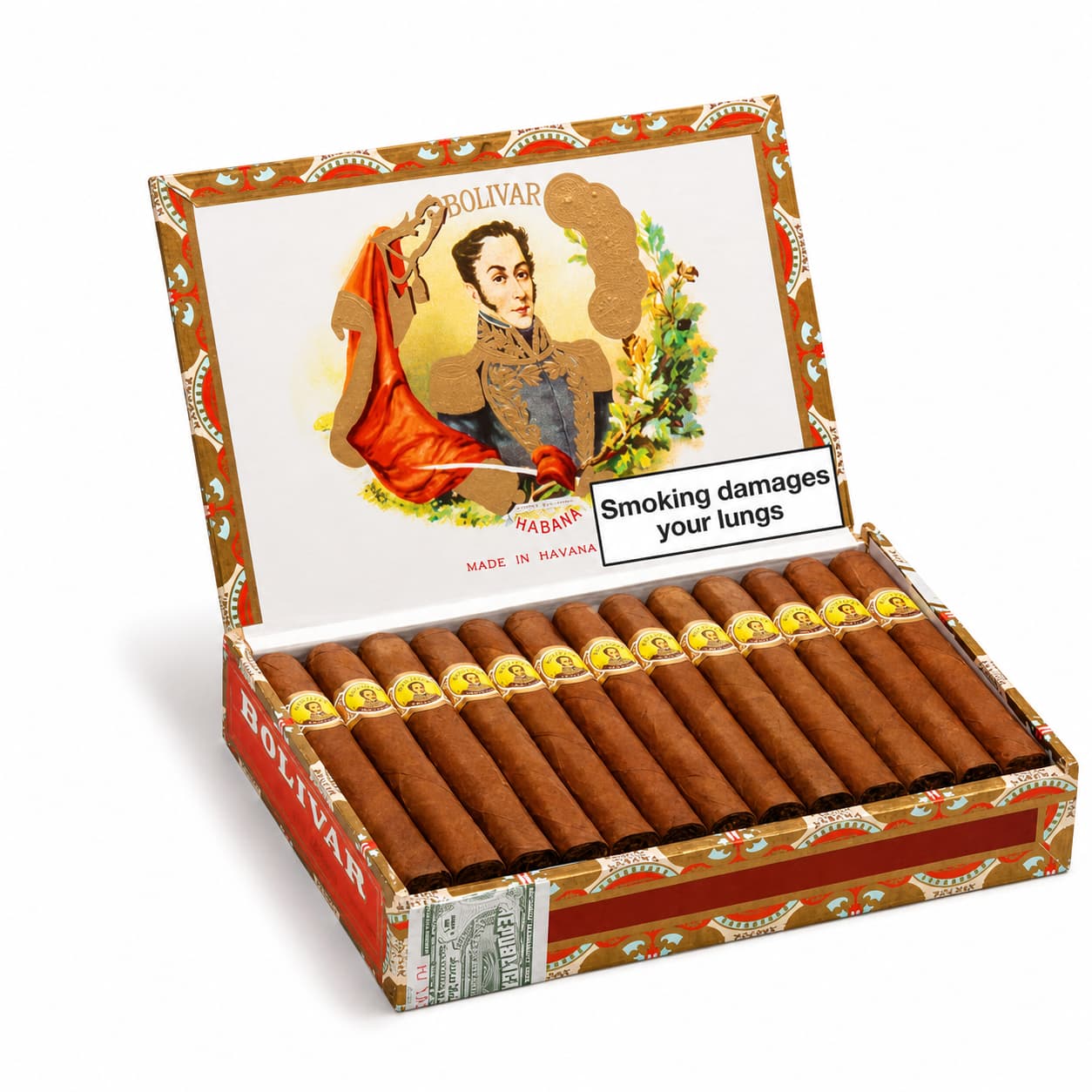
Bolivar Petit Corona
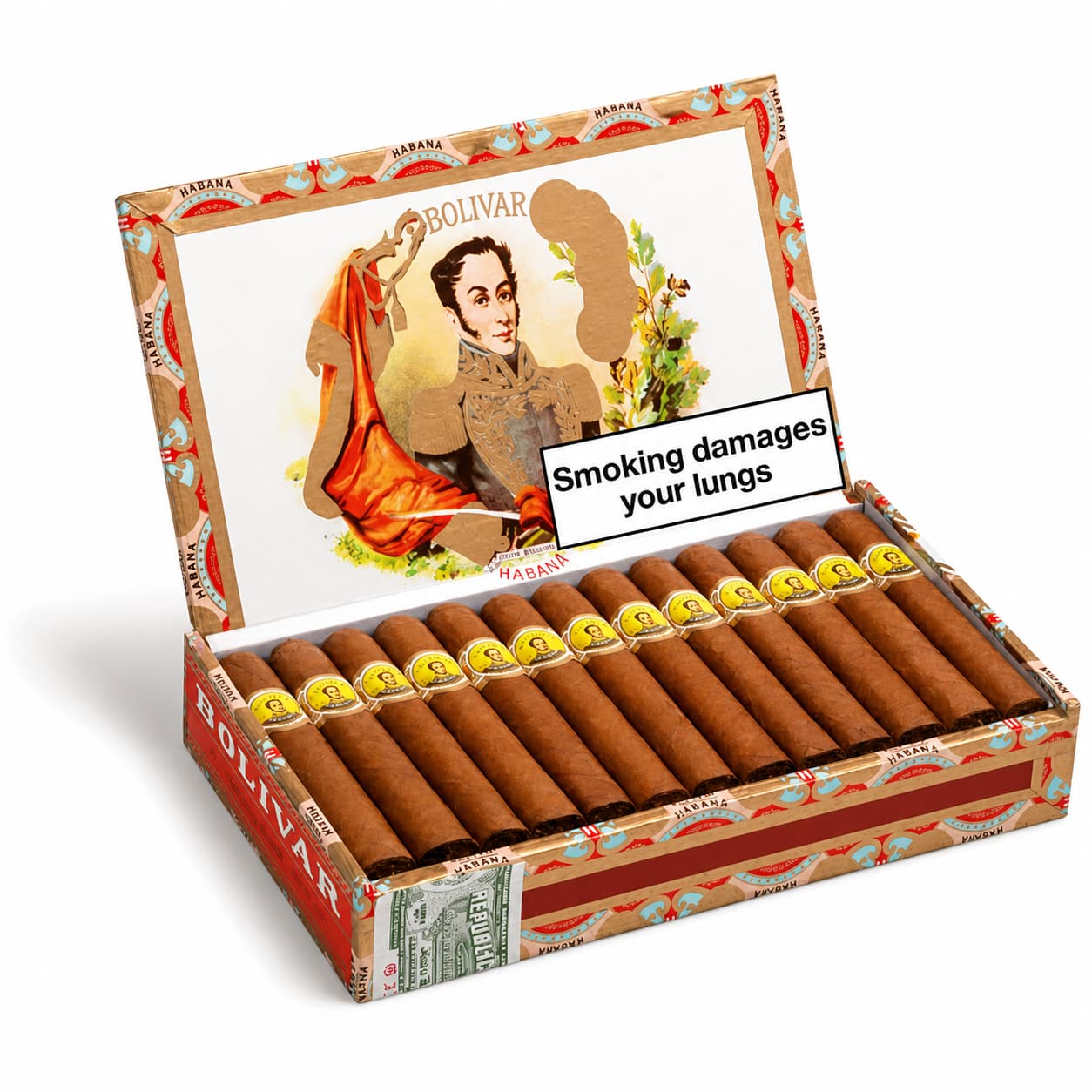
There's a reason Bolivar wears its name like a declaration of war. Simón Bolívar liberated nations. This cigar, bearing his likeness in gilt on every band, attempts something equally ambitious: to liberate your palate from the polite, the restrained, the forgettable. The Petit Corona does not arrive at your table asking permission. It kicks the door in.






At a glance
There's a reason Bolivar wears its name like a declaration of war. Simón Bolívar liberated nations. This cigar, bearing his likeness in gilt on every band, attempts something equally ambitious: to liberate your palate from the polite, the restrained, the forgettable. The Petit Corona does not arrive at your table asking permission. It kicks the door in.
| Specification | Details |
|---|---|
| Vitola | Mareva (Petit Corona) |
| Ring Gauge | 42 |
| Length | 129mm (5.1") |
| Factory | Partagás, Havana |
| Strength | Full |
| Wrapper | Cuban |
| Box Count | Box of 25, Single |
The Bolivar brand has never traded in subtlety. Founded at the turn of the 20th century and produced at the legendary Partagás factory in the heart of Havana, these cigars carry the genetic code of Cuban tobacco at its most unapologetic. While other Habanos brands court elegance or aromatic refinement, Bolivar reaches for intensity—a choice that has earned it a devoted following among smokers who believe a cigar should leave a mark. The Petit Corona, perhaps the most accessible entry point into the Bolivar portfolio, offers that signature brutality in a concentrated 45-minute package. Pre-1960s blend architecture lives in this vitola, a time capsule of what Cuban tobacco tasted like before the revolutions, the nationalizations, the upheavals. Age it three to five years and the rough edges file down to reveal surprising sophistication. Smoke it young and you get the raw, untamed experience that made the brand famous.
First Light
The opening draws you in with a dry, woody foundation—Spanish cedar and rawhide establishing the structural bones. Black pepper lands on the retrohale with authority, the kind that makes your eyes water if you're not prepared. Beneath that aggressive opening, there's a mineral earthiness that speaks to the Vuelta Abajo soils, a loamy depth that grounds the spice and keeps it from becoming purely combative. The draw offers modest resistance, typical of the Mareva format, and the burn line sets true from the first centimeter.
The Journey
The second third reveals why Bolivar enthusiasts age their cigars. What began as a leather-and-earth forward assault now unfurls layers of complexity that have no business existing in a cigar this compact. Roasted coffee bean emerges at the center of the palate, accompanied by a faint cocoa sweetness that plays counterpoint to the continuing pepper campaign. There's a creaminess here, too—an almost vanilla undertone that softens the edges without compromising the full-bodied character. The smoke texture thickens, coating the mouth in a way that demands your attention. This is where the Petit Corona distinguishes itself from lesser corona formats: it has somewhere to go, a narrative arc that builds rather than merely persists.
The Finale
The final act brings everything home with intensified force. The leather notes deepen into something almost animalic, joined by dark chocolate that carries a bitter-sweet tension. Wood returns, but now it's charred cedar rather than fresh-cut, speaking to the combustive transformation occurring between your fingers. The pepper never fully retreats—it's Bolivar, after all—but it integrates into a finish that resonates for minutes after the final puff. The nicotine strength announces itself here, a reminder that this petit format packs the density of cigars twice its size.
Who It's For
The Bolivar Petit Corona is the cigar you reach for when you have 45 minutes and the need for something that refuses to be background music. It suits the experienced smoker who has moved past the training wheels of mild Connecticut wrappers and wants to test their palate against something with genuine heft. This is a post-steak cigar, a post-argument cigar, a Tuesday-evening-when-you've-earned-it cigar. It's also an ideal format for the traveler—compact enough for a jacket pocket, substantial enough to matter.
Pairing Suggestion
Aged dark rum with residual sweetness—perhaps a Zacapa 23 or Diplomático Reserva Exclusiva—provides the necessary counterweight to the Bolivar's leathery aggression, while a double espresso will lean into the cigar's coffee and cocoa undertones for a more confrontational pairing.
 Traceable to factory and harvest year · Duty Free Authentic Cuban
Our Promise
Every cigar guaranteed authentic Habanos — traceable to factory and harvest, humidified, shipped duty free.
Our guarantee →
Perfect pairings

You may also like
Related Articles
Bolívar Bolivares
Bolívar Bolivares The Bolívar Bolivares stands as a notable entry in the storied history of one of Cuba's most respected cigar marques. Named after...
Cigar InfoBolívar Petit Bolivar
Bolívar Petit Bolivar The Bolívar Petit Bolivar stands as a notable entry in the storied history of the Bolívar brand, one of Cuba's most respected...
Cigar InfoBolívar Short Bolivar Edición Regional Asia Pacifico
Bolívar Short Bolivar Edición Regional Asia Pacifico The Bolívar Short Bolivar represents a distinctive addition to the Regional Edition Series,...