

The Connoisseur's Guide to Havana Cigars
Author: Gérard Père et Fils
For cigar enthusiasts seeking a thoughtful reference work from the golden era of Cuban tobacco documentation, The Connoisseur's Guide to Havana Cigars remains a noteworthy contribution to the literature. Originally published in French in 1990, this comprehensive guide received its English translation in the 1992 second edition, with a third revision appearing in 1997.
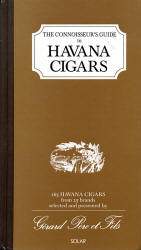
Physical Presentation
This substantial hardcover volume spans 256 pages within compact dimensions of 215mm by 130mm, making it both detailed enough for serious study yet portable enough for practical reference. The production quality is evident throughout, with abundant color photographs capturing cigar bands, finished cigars, packaging designs, and brand emblems—visual documentation that proves invaluable for identification purposes.
Content Structure
The work is organized into three distinct sections, each serving a specific purpose for the reader:
- "How Havana Cigars Are Made" — An educational exploration of the craftsmanship behind Cuban cigar production
- "Choosing a Havana" — Practical guidance for selection and purchasing decisions
- "Tasting a Havana" — The most extensive portion of the book, dedicated to the sensory evaluation of handmade cigars
_small1.jpg)
The Tasting Section
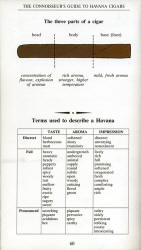
The substantial tasting portion focuses exclusively on handmade cigars, providing systematic evaluations that cover every aspect of the smoking experience. Each entry details the cigar's specifications and packaging, followed by assessments of pre-light taste and aroma, combustion characteristics, lit taste and aroma profiles, overall smoking qualities, and the author's recommendations.
What distinguishes these tasting notes is their refreshing directness. The descriptions of flavor and aroma are precise and economical, delivering essential information without unnecessary embellishment or poetic excess. For readers who prefer straightforward, actionable tasting information, this approach proves highly effective.

Historical Value
Perhaps the greatest strength of this guide lies in its function as a historical document. It captures the Cuban cigar landscape as it existed around 1992, preserving information about vitolas, packaging, and flavor profiles from a specific moment in time. Three decades on, this snapshot quality transforms the book into an invaluable reference for understanding how certain cigars have evolved—or in some cases, disappeared entirely.
For collectors and enthusiasts interested in developing their own cigar evaluation skills, the methodical grading approach demonstrated throughout these pages offers an excellent template for systematic tasting and assessment.
Verdict
Despite the passage of time, The Connoisseur's Guide to Havana Cigars retains genuine relevance for the serious cigar aficionado. Its combination of production education, selection guidance, and disciplined tasting notes makes it a worthy addition to any cigar library, particularly for those who appreciate clear, unadorned flavor descriptions and historical perspective on the Cuban cigar industry.