

Ramón Allones Private Stock No.1
The Private Stock No.1 represents a fascinating chapter in the Ramón Allones portfolio—a Cuban cigar that has since been retired from production but remains a point of interest for collectors and cigar historians. This discontinued regular production vitola offers a glimpse into the brand's mid-century offerings.
Specifications

| Cigar Name | Private Stock No.1 |
| Factory Name | Unknown |
| Ring Gauge | 38 |
| Length | 163 mm (6⅜″) |
| Estimated Weight | 8.61 g |
| Construction | Handmade |
| Band | Standard band A |
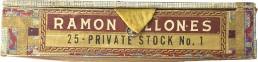
| Packaging | Dress box of 25 cigars |
History and Release Timeline
The Private Stock No.1 entered the market prior to 1960, making it one of the older documented releases in the Ramón Allones catalog. Production continued through the 1960s before the cigar was ultimately discontinued in 1970. This decade-long run places the cigar firmly within a transformative period for the Cuban cigar industry.

Packaging Details
The presentation of the Private Stock No.1 reflected the attention to detail characteristic of premium Cuban cigars of its era. The dress box featured an elegant ribbon that draped across the cigars inside, secured to the exterior of the box by a press-stud fastener. This decorative touch spoke to the refined positioning of the Private Stock line within the Ramón Allones portfolio.
Format and Smoking Experience
With a ring gauge of 38 and a length of 163 millimeters, the Private Stock No.1 fell into the slender, longer format category. These dimensions would have delivered an extended smoking session with a cooler draw and more nuanced flavor development—characteristics prized by experienced aficionados of the period.
Collectibility
As a pre-1960 release that exited production in 1970, the Private Stock No.1 has become a sought-after piece for serious collectors of vintage Cuban cigars. Its relatively brief production window and the passage of decades have made surviving examples increasingly rare in the secondary market.