

Ramón Allones Club Coronas
The Ramón Allones Club Coronas represents a fascinating chapter in Cuban cigar history—a vitola that debuted before 1960 and enjoyed a relatively brief production run before being retired in the 1970s. This discontinued regular production cigar holds particular interest for collectors and historians studying the evolution of Ramón Allones as a brand.
Historical Significance
The Club Coronas holds a special place in Ramón Allones heritage as an early iteration of what would become known as Standard Band C. This naming convention provides valuable insight into how the brand organized and categorized its various releases during the mid-20th century. The cigar's discontinuation in the 1970s means that surviving examples have become increasingly rare, making this a sought-after reference point for understanding the brand's development.

Specifications
| Cigar Name | Club Coronas |
| Factory Name | Cosacos |
| Ring Gauge | 42 |
| Length | 135 mm (5⅜″) |
| Official Weight | 8.84 g |
| Construction | Handmade |
| Band | Special Club Corona band |
| Packaging | Dress box of 25 cigars |
| Release Date | Pre-1960 |
| Discontinued | 1970s |
Construction and Presentation
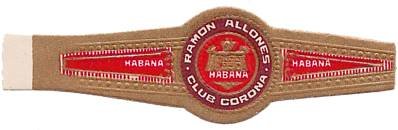
As a handmade cigar, the Club Coronas benefited from the skilled craftsmanship that defined Cuban cigar production during this era. The vitola featured its own distinctive Special Club Corona band, distinguishing it from other offerings in the Ramón Allones portfolio. The cigars were presented in dress boxes containing 25 units, reflecting the premium positioning typical of the brand.
The Cosacos Vitola
Under the factory designation "Cosacos," this cigar measured 135 mm in length with a 42 ring gauge—a classic corona format that allowed for a balanced smoking experience. The dimensions placed it firmly within traditional Cuban sizing conventions, offering enthusiasts a measured, contemplative smoke that showcased the blend characteristics Ramón Allones was known for.
Legacy and Collectibility
Today, the Ramón Allones Club Coronas exists primarily as a historical reference point. Its production span of roughly two decades represents a significant period in Cuban cigar manufacturing, bridging the pre-revolution and post-revolution eras. For serious students of cigar history, this vitola exemplifies how brands evolved their offerings during times of tremendous change in Cuba's tobacco industry.