

J. J. Fox Exclusives La Corona Policromia Purple
The La Corona Policromia Purple stands as a fascinating chapter in Cuban cigar history, representing one of the exclusive offerings created for the distinguished J. J. Fox retail establishment. This regular production cigar, now long discontinued, offers collectors and enthusiasts a glimpse into the collaborative relationship between Havana's cigar factories and prominent international tobacconists during the mid-20th century.

Historical Background

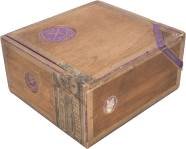
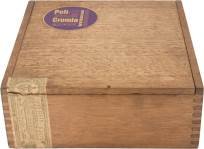
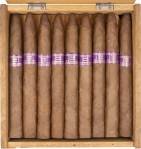
Released in 1960, the Policromia Purple entered the market during a transformative period for Cuban cigars. The cigar remained in production for approximately two decades before being discontinued in the 1980s. During its production run, the branding underwent a notable evolution: originally featuring both a La Corona Policromia band alongside a distinct purple band, the presentation was streamlined in the 1970s to a single Poli-cromia Purple band.
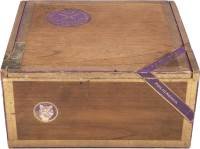
This transition reflected a broader shift in the late 1970s, when the entire Policromia line transitioned from operating under the La Corona brand umbrella to standing as an independent marque with its own distinctive labeling.
Specifications
| Name | La Corona Policromia Purple |
| Factory Name | Unknown |
| Ring Gauge | 44 |
| Length | 163 mm (6⅜″) |
| Estimated Weight | 9.86 g |
| Construction | Handmade |
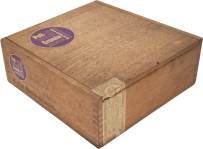
| Packaging | Dress box of 25 cigars |
| Release Date | 1960 |
| Discontinued | 1980s |
Size Classification
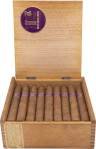
Collectors should note that the dimensional measurements provided are approximate, derived from examination of surviving vintage examples. The cigar's dimensions place it comfortably within the broader Corona family, though its specific proportions represent a unique configuration created for this exclusive release.
Collectibility
As a discontinued J. J. Fox exclusive with a production span of roughly twenty years, the Policromia Purple represents a significant find for serious collectors of vintage Cuban cigars. The brand's transition from dual-band presentation to single-band format in the 1970s provides an additional point of interest for those studying the evolution of Cuban cigar packaging and marketing during this pivotal era.