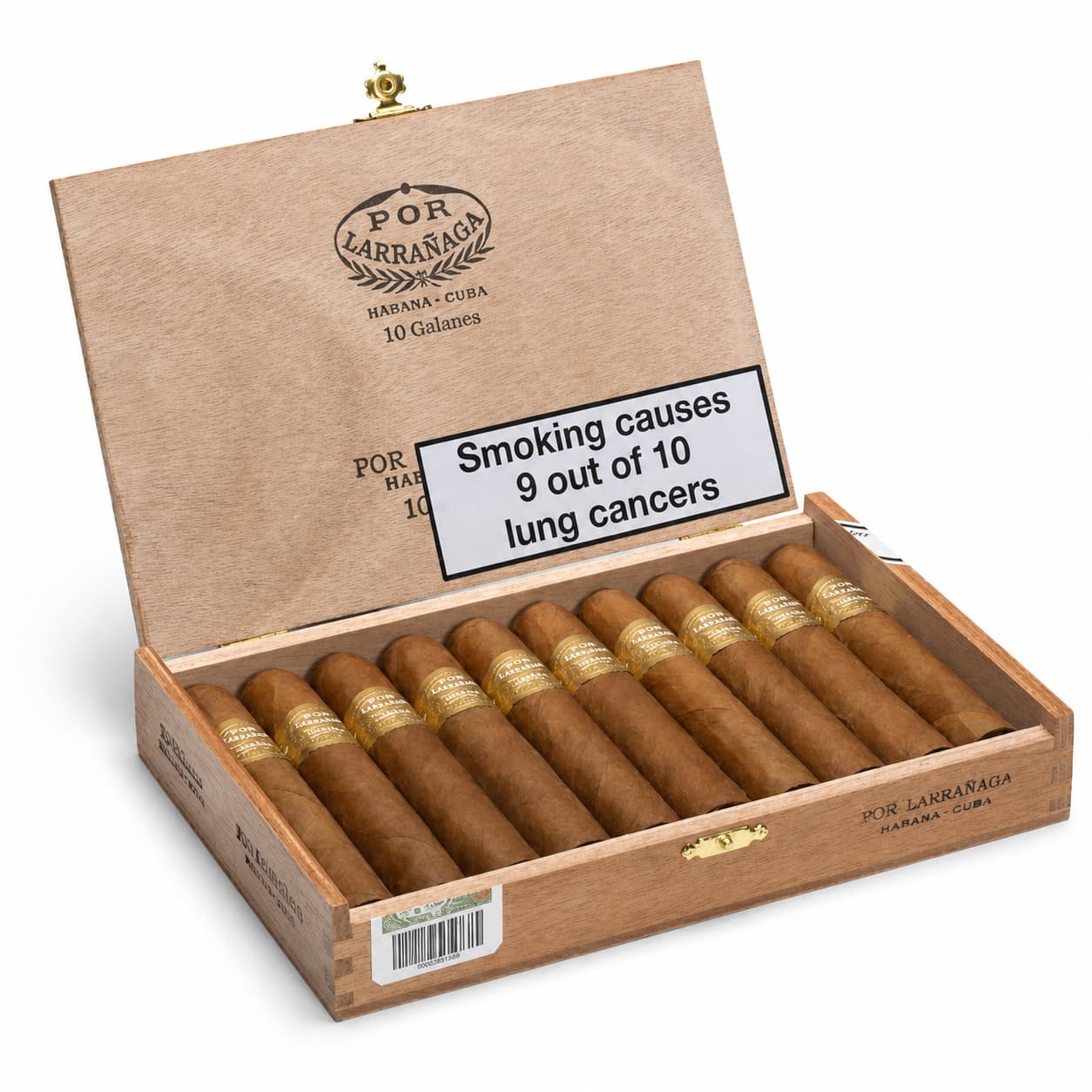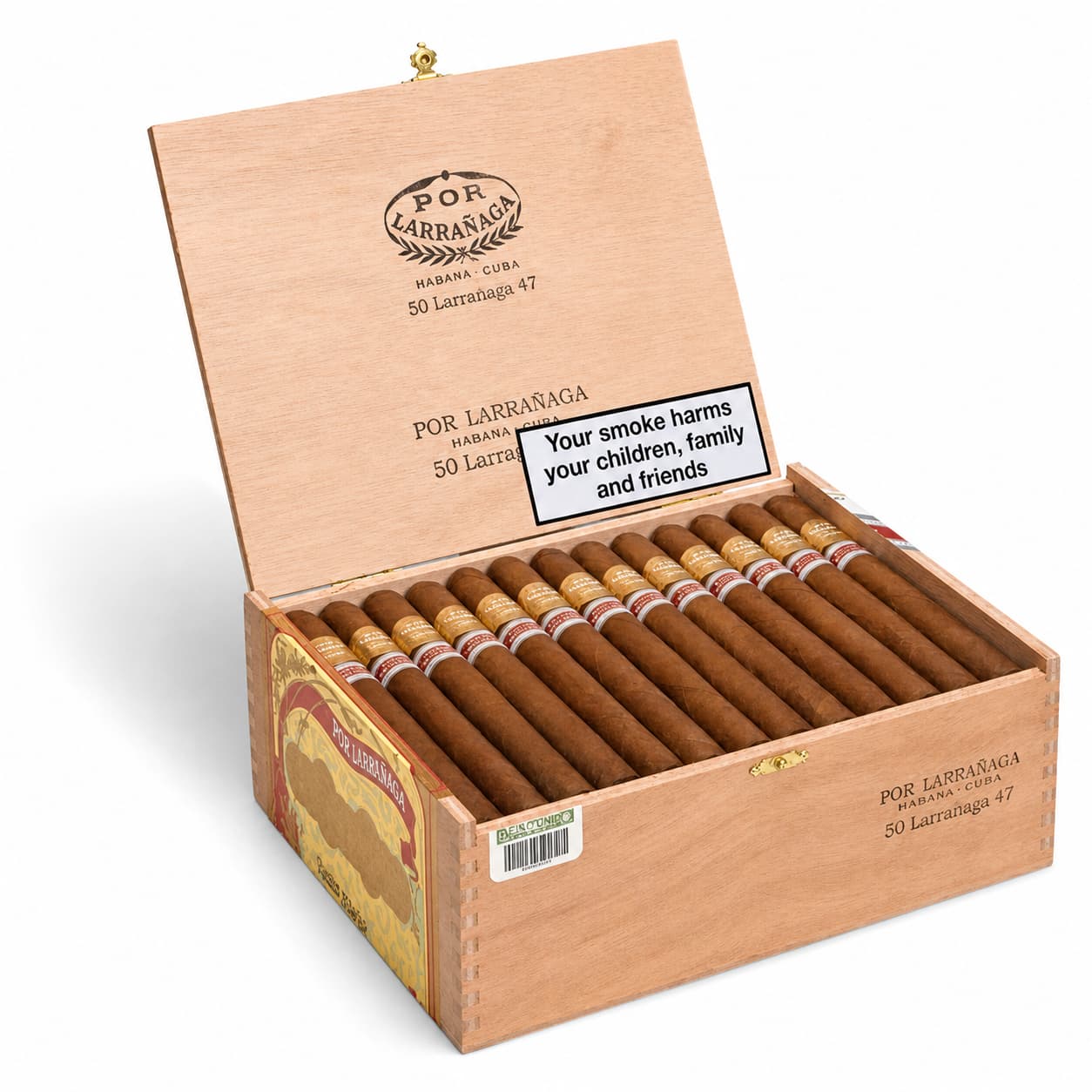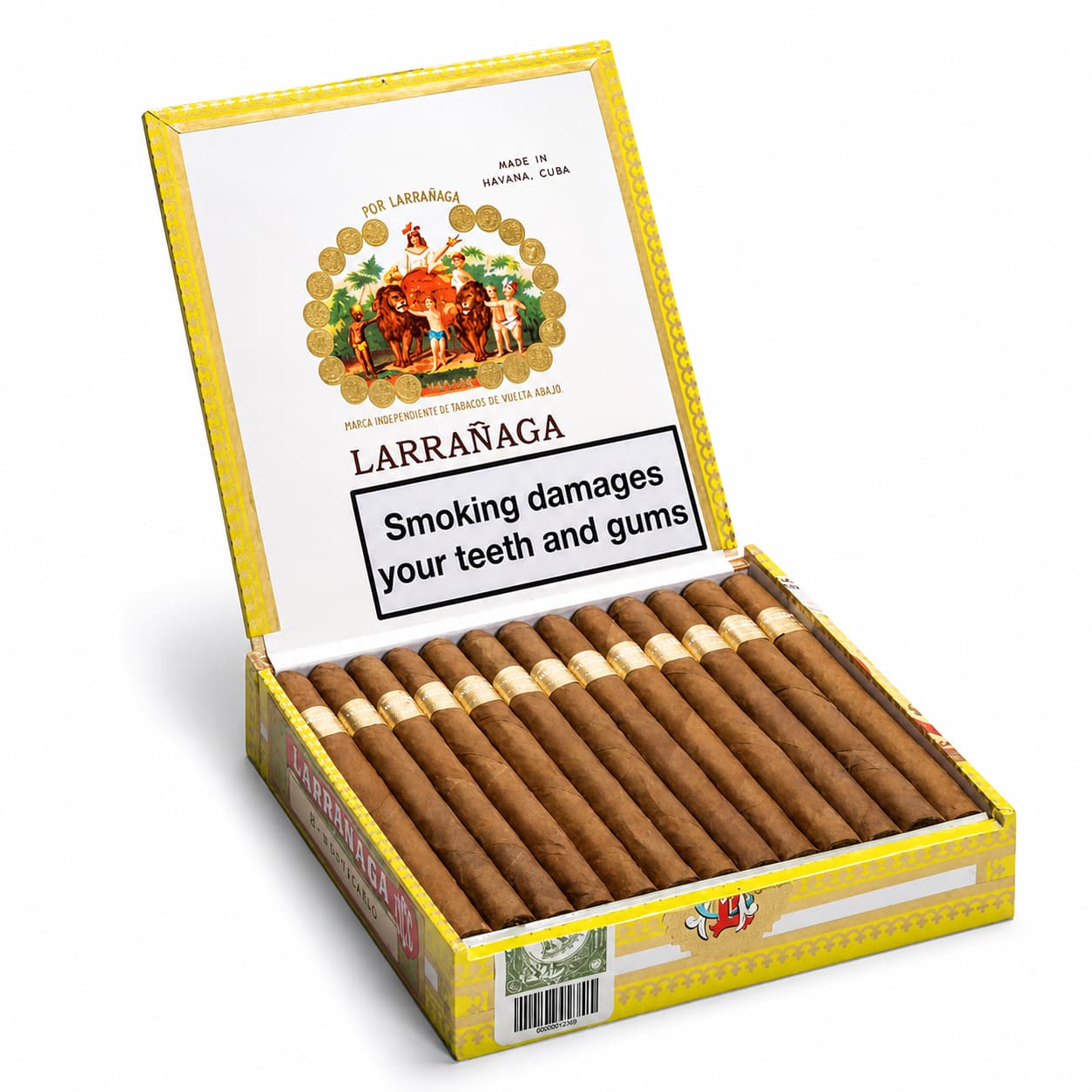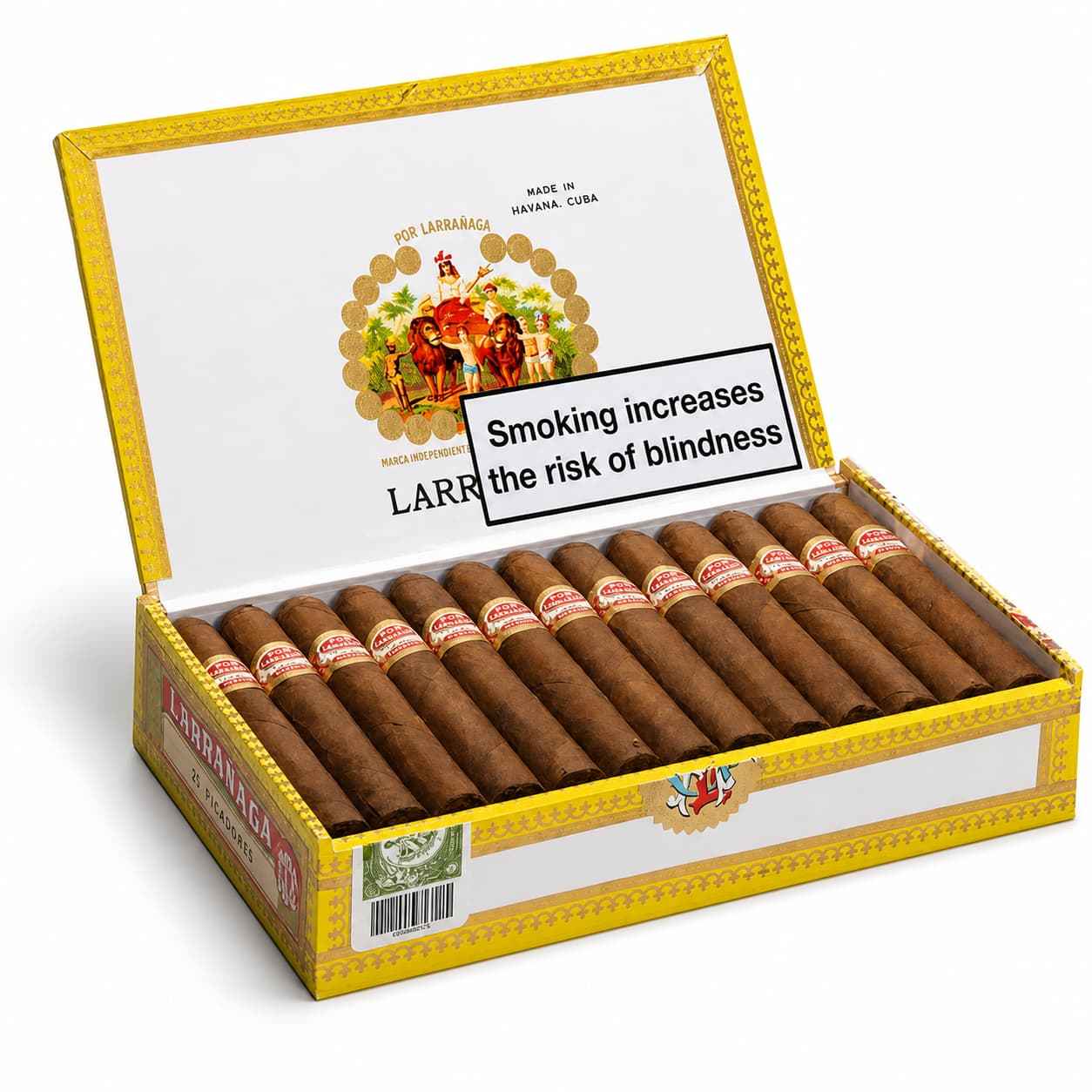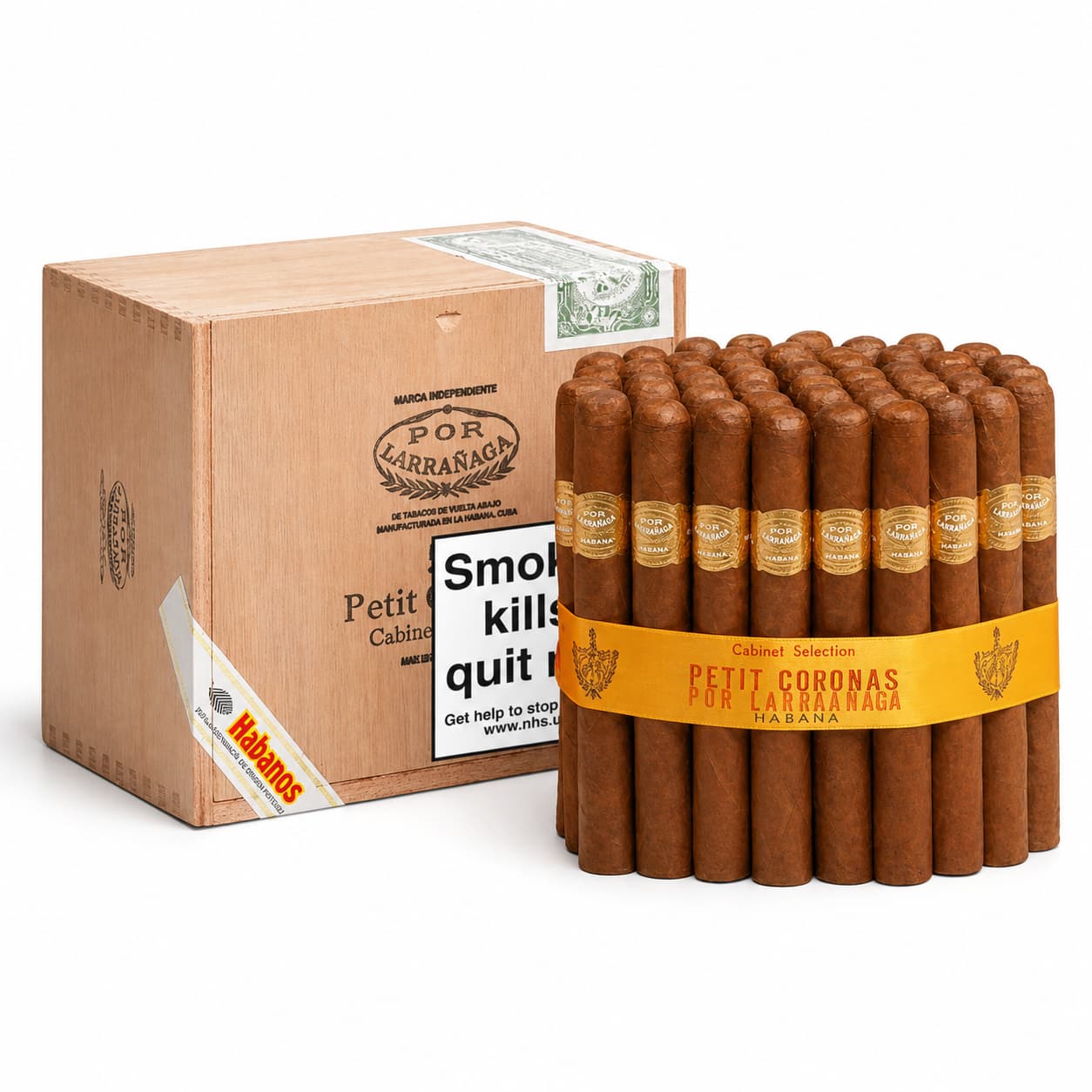

Por Larranaga Petit Corona






At a glance
Por Larranaga Petit Corona
There is a particular kind of pleasure in discovering something that the rest of the world has overlooked. Not because it lacks merit, but because it quietly goes about its business while flashier names command the spotlight. The Por Larranaga Petit Corona is exactly that kind of treasure—a cigar that has been in continuous production since before the Cuban Revolution, yet remains one of Habanos's most underappreciated gems.
| Specification | Details |
|---|---|
| Vitola | Mareva (Petit Corona) |
| Ring Gauge | 42 |
| Length | 129mm (5 1/8") |
| Factory | Havana, Cuba (Habanos S.A.) |
| Strength | Mild to Medium |
| Wrapper | Cuban Corojo |
| Box Count | Box of 50, Single |
The Por Larranaga brand carries a distinction that few can claim: it is one of the oldest cigar trademarks still in production, with roots stretching back to 1834. Founded by Ignacio Larranaga and Julián Rivera, the brand built its reputation on consistency and approachability rather than bombast. In the modern era, Por Larranaga has become something of a connoisseur's secret—a label that seasoned smokers reach for when they want genuine Cuban character without the premium pricing of the marquee names. The Petit Corona, known by its factory name Mareva, represents perhaps the purest expression of the house style. This is not a cigar that demands your attention with aggressive strength or theatrical transitions. Instead, it offers something rarer: an honest, well-constructed smoke that reveals its pleasures gradually, rewarding those who pay attention.
What makes this particular vitola special is its role as a reference point for the format. The Mareva has become the industry standard for what a petit corona should be, and Por Larranaga's execution remains a benchmark. The construction is typically impeccable—firm to the touch with just enough give, a wrapper that gleams with the subtle oils of well-aged tobacco, and a draw that manages the difficult balance between resistance and openness. At 129mm with a 42 ring gauge, it delivers a focused smoking experience that concentrates flavor without the commitment of a larger format.
First Light
The opening sets the tone immediately: a gentle burst of cedar and raw honey sweetness that coats the palate without overwhelming it. There is a creamy quality here, almost like warm custard, underpinned by hints of vanilla bean and a whisper of citrus zest. The smoke is cool and voluminous, and the retrohale reveals a delicate floral note that hints at the elegance to come. This is not a cigar that announces itself with pepper or spice—instead, it extends an invitation.
The Journey
As the burn line progresses into the second third, the sweetness begins to temper, giving way to more savory territory. Toasted almonds emerge as the dominant note, accompanied by a light oakiness that speaks to the quality of the barrel-aging process. A subtle spice—not the aggressive black pepper of fuller-bodied cigars, but something closer to cinnamon or grated nutmeg—dances at the edges. The creaminess persists, providing a smooth canvas for these evolving flavors. The balance here is remarkable; no single element dominates, and the transitions are seamless rather than dramatic.
The Finale
The final act brings a gentle grounding. The cedar returns, now deeper and more resonant, mingling with earth notes and the distinct character of walnut shell. There is a mild tannic quality, reminiscent of aged tea, that provides structure without bitterness. The honey sweetness makes a brief reappearance in the closing moments, a final grace note that leaves the palate clean rather than heavy. The finish is medium in length, with a pleasant oaky resonance that lingers.
Who It's For
This is a cigar for the morning smoker, the contemplative pause between tasks, or the experienced aficionado who has moved beyond the need for strength as a proxy for quality. It suits those who appreciate subtlety over spectacle, who understand that a mild-to-medium cigar can offer as much complexity as its full-bodied counterparts—just expressed in a different register. The forty-minute smoking time makes it ideal for a coffee break or as an accompaniment to conversation when you want the cigar to complement rather than dominate.
Pairing Suggestion
A well-prepared cortado or flat white brings out the nutty and caramel notes beautifully, while a aged rum with honey undertones—perhaps a Dominican or Venezuelan expression—will mirror the cigar's inherent sweetness without competing with its delicate balance.
 Traceable to factory and harvest year · Duty Free Authentic Cuban
Our Promise
Every cigar guaranteed authentic Habanos — traceable to factory and harvest, humidified, shipped duty free.
Our guarantee →
Perfect pairings

You may also like