
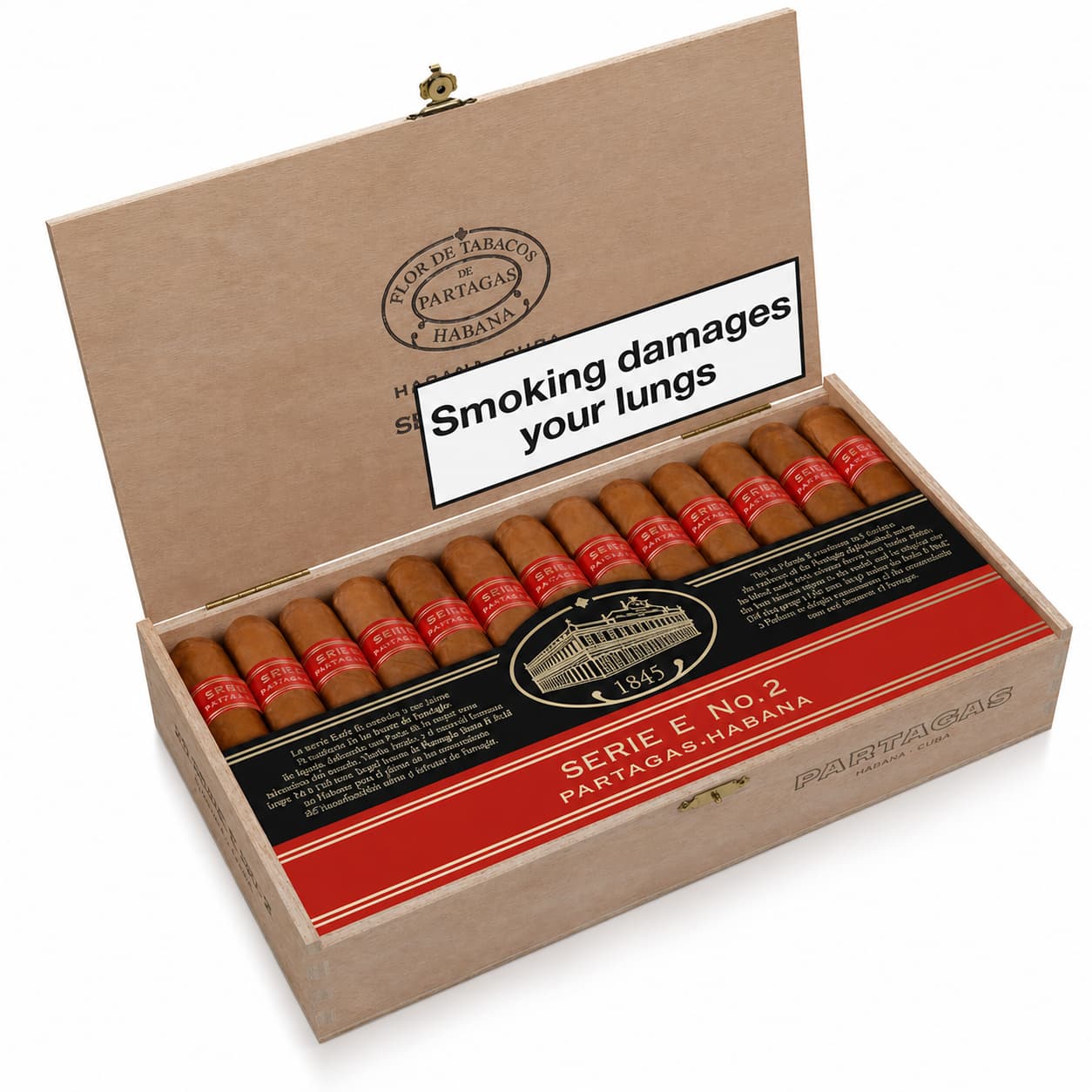

Partagas Serie E No.2
Partagás Serie E No.2






At a glance
Partagas Serie E No.2
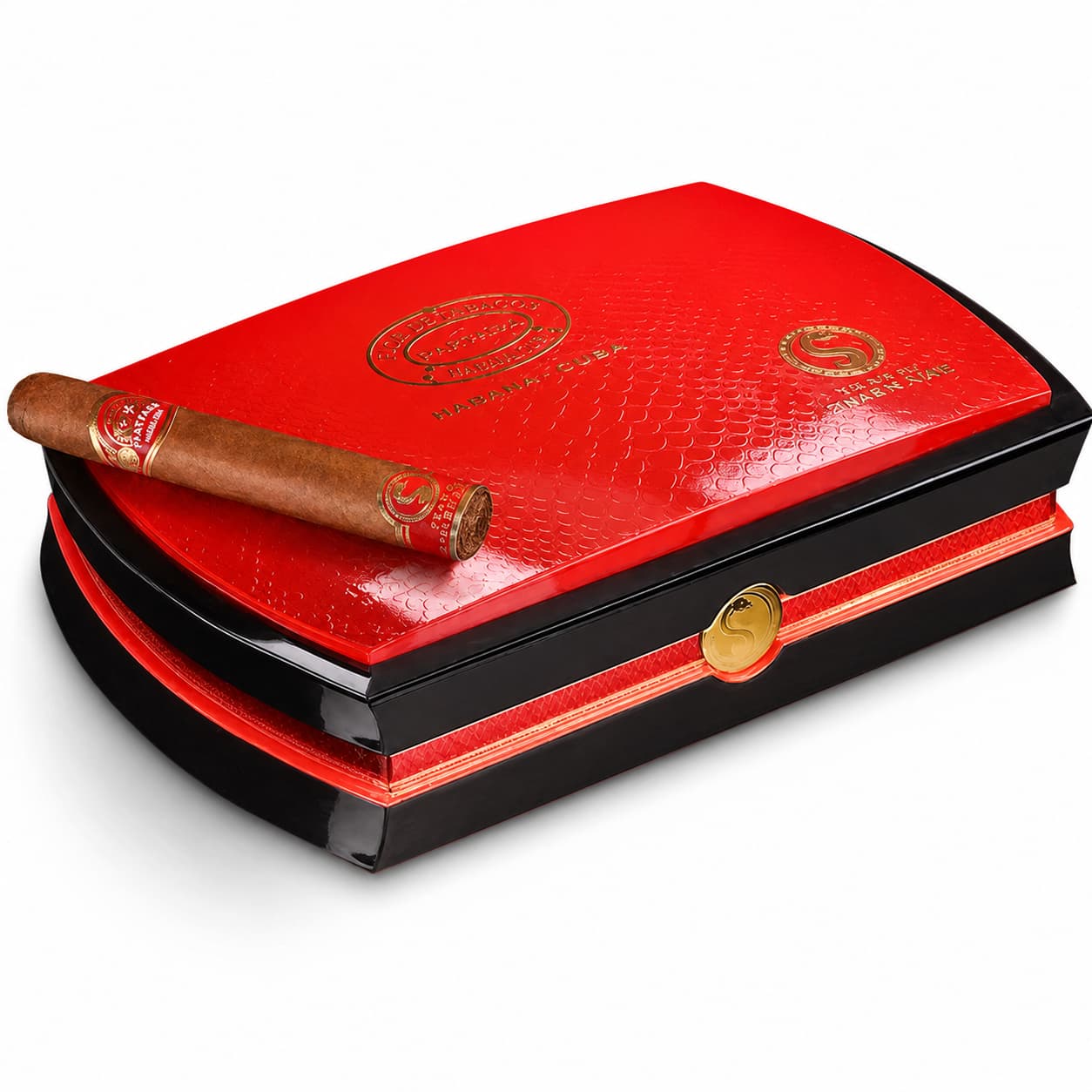
There's a particular kind of confidence that comes from a 54-ring gauge sitting between your fingers—the assurance that what follows will not ask permission, nor will it apologize for its presence. The Partagás Serie E No.2 embodies this philosophy in wrapper form, a cigar that arrived in 2011 and immediately staked its claim as the broadest-shouldered regular production offering from one of Havana's most storied houses.
| Specification | Details |
|---|---|
| Vitola | Duke |
| Ring Gauge | 54 |
| Length | 140mm (5½") |
| Factory | Havana, Cuba |
| Strength | Medium-Full |
| Wrapper | Cuban |
| Box Count | Box of 25, Box of 5, Single |
The Duke vitola remains something of an anomaly in the Cuban catalog—this is the only marca producing it, and Partagás has made the format unequivocally their own. The Serie E No.2 represents the brand at its most modern while refusing to abandon the earthy, muscular character that has defined Partagás since 1845. When Habanos sought to expand their robusto gordo offerings, they understood that Partagás demanded something with genuine heft—a canvas substantial enough to carry the brand's signature intensity without overwhelming the smoker. The result earned a #3 ranking in Cigar Aficionado's 2016 Top 25 with a 94-point score, a recognition that confirmed what seasoned smokers had already discovered: this was no mere trend-chasing release, but a legitimate addition to the Partagás canon.
The story of the Serie E No.2 is inseparable from the evolution of contemporary smoking preferences. As global palates gravitated toward larger ring gauges, Partagás faced a choice—follow the market with diluted offerings or create something that honored their heritage while speaking to modern demands. They chose the latter. The Duke format, with its generous 54-ring gauge and substantial 140mm length, provides enough tobacco and enough time for the Partagás blending philosophy to unfold properly. This is not a quick smoke squeezed into a trendy format; it is a proper examination of what Cuban tobacco can achieve when given room to breathe.
First Light
The opening act announces itself with an intriguing interplay of spice and sweetness. Sweet chili notes emerge alongside bright citrus accents, creating an aromatic profile that feels almost conversational—the cigar introducing themes it will develop more fully as the burn progresses. The draw offers just enough resistance to remind you this is hand-rolled Cuban tobacco, and the ash holds with the tenacity characteristic of well-constructed Partagás. There is an immediate warmth here, not aggressive but certainly present, a promise of the strength that will build.
The Journey
The second third marks a transition that separates skilled blenders from mere assemblers of tobacco. The sweetness recedes as woody notes move to the foreground—cedar and aged timber, the kind you encounter in a properly seasoned humidor or a cooper's workshop. The strength builds incrementally, medium becoming medium-full, the smoke gaining weight and texture. What began as bright and almost playful now deepens into something more contemplative. The pepper that lurked beneath the surface begins to announce itself more directly, particularly on the retrohale, while the citrus evolves from sharp brightness to a more mellow, almost candied character.
The Finale
The final act brings the Serie E No.2 to its logical conclusion. Sweet hay emerges—a distinctly Cuban note that evokes sun-dried tobacco leaves and agricultural honesty—woven through with black coffee that carries genuine bitterness without astringency. The citrus returns, transformed now into something closer to orange zest than the brighter notes of the opening. The strength reaches its full medium-full expression, demanding attention without becoming punishing. This is where the Duke format proves its worth; a smaller vitola would have rushed this conclusion, but the Serie E No.2 has the real estate to land its final statements with proper deliberation.
Who It's For
The Serie E No.2 suits the smoker who has moved past the initial discovery phase of Cuban cigars and seeks something with genuine architectural integrity. This is an evening cigar, ideally paired with the kind of unhurried conversation that allows an hour to disappear unnoticed. It rewards the experienced palate while remaining accessible enough to serve as an introduction to what Partagás represents in the broader Cuban landscape. For those who find Cohiba too refined or Montecristo too ubiquitous, the Serie E No.2 offers a path less traveled—one lined with leather, wood, and the accumulated wisdom of 175 years of cigar making.
Pairing Suggestion
A aged añejo tequila or a smoky single malt with sherry influence provides complementary weight without competing with the cigar's inherent complexity.
 Traceable to factory and harvest year · Duty Free Authentic Cuban
Our Promise
Every cigar guaranteed authentic Habanos — traceable to factory and harvest, humidified, shipped duty free.
Our guarantee →
Perfect pairings

You may also like
Related Articles
Partagás Partagas Pride
Partagás Pride The Partagás Pride stands as a fascinating chapter in the storied history of one of Cuba's most revered cigar houses. This...
Cigar InfoPartagás Petit Partagas
Partagás Petit Partagas The Partagás Petit Partagas represents a discontinued regular production cigar from one of Cuba's most storied cigar houses....