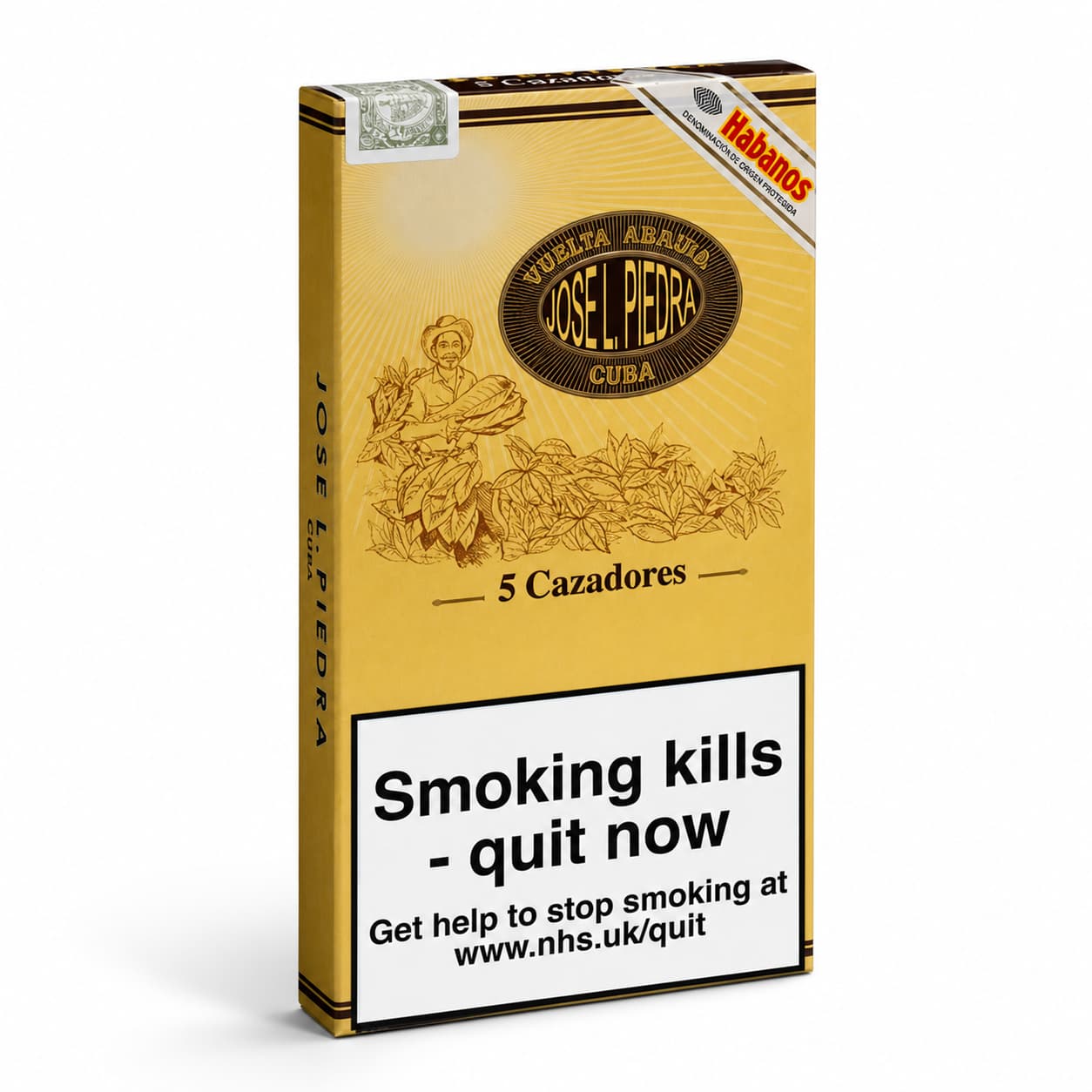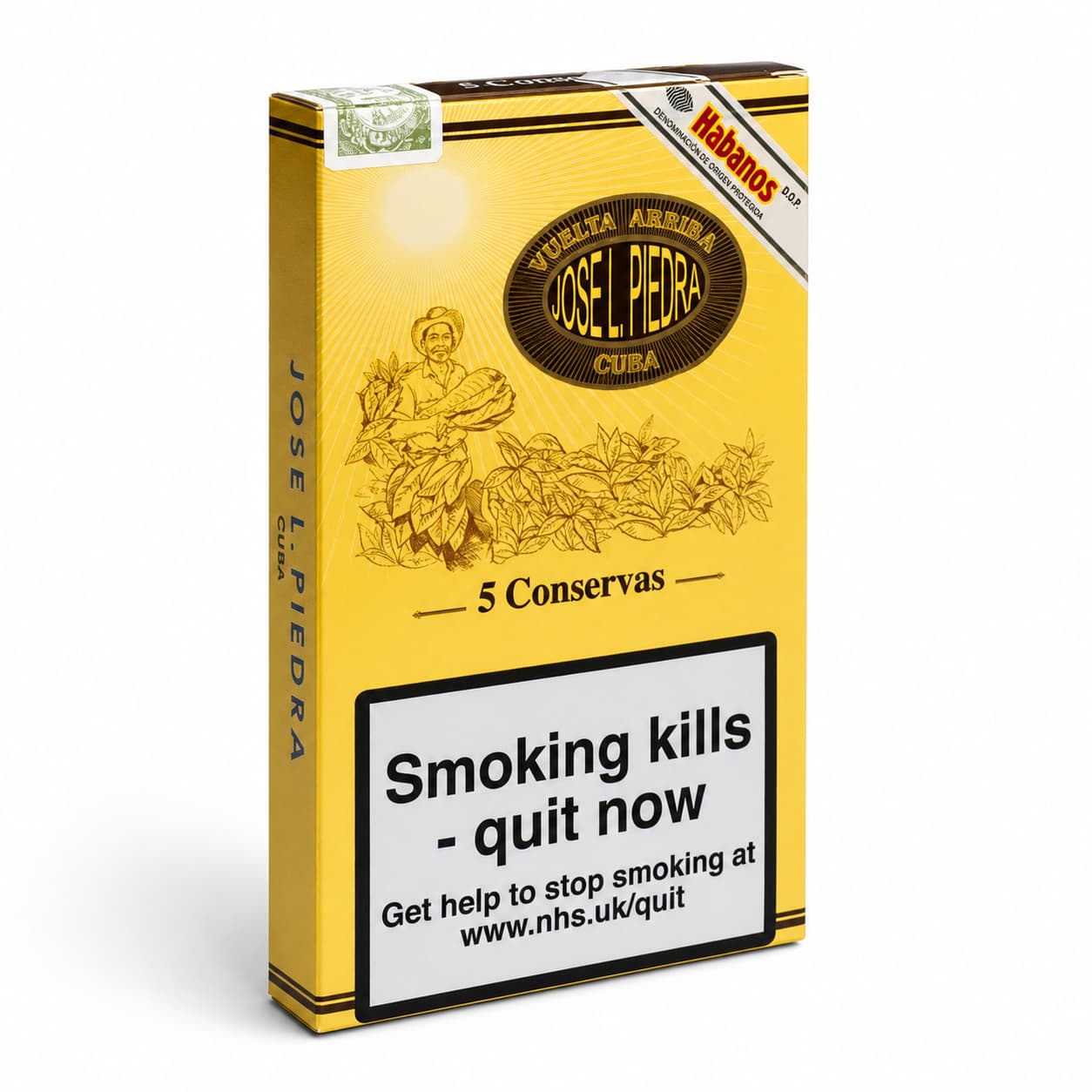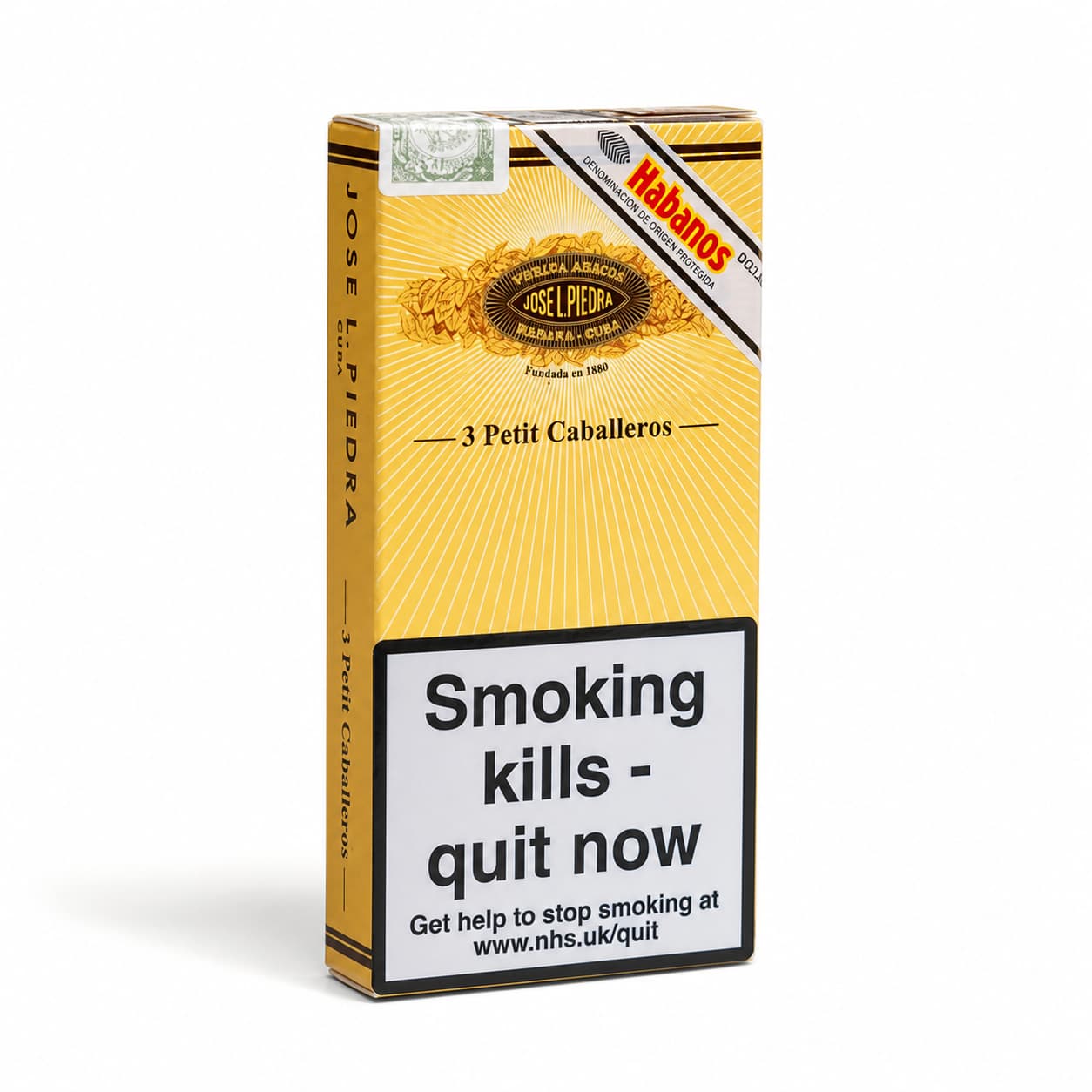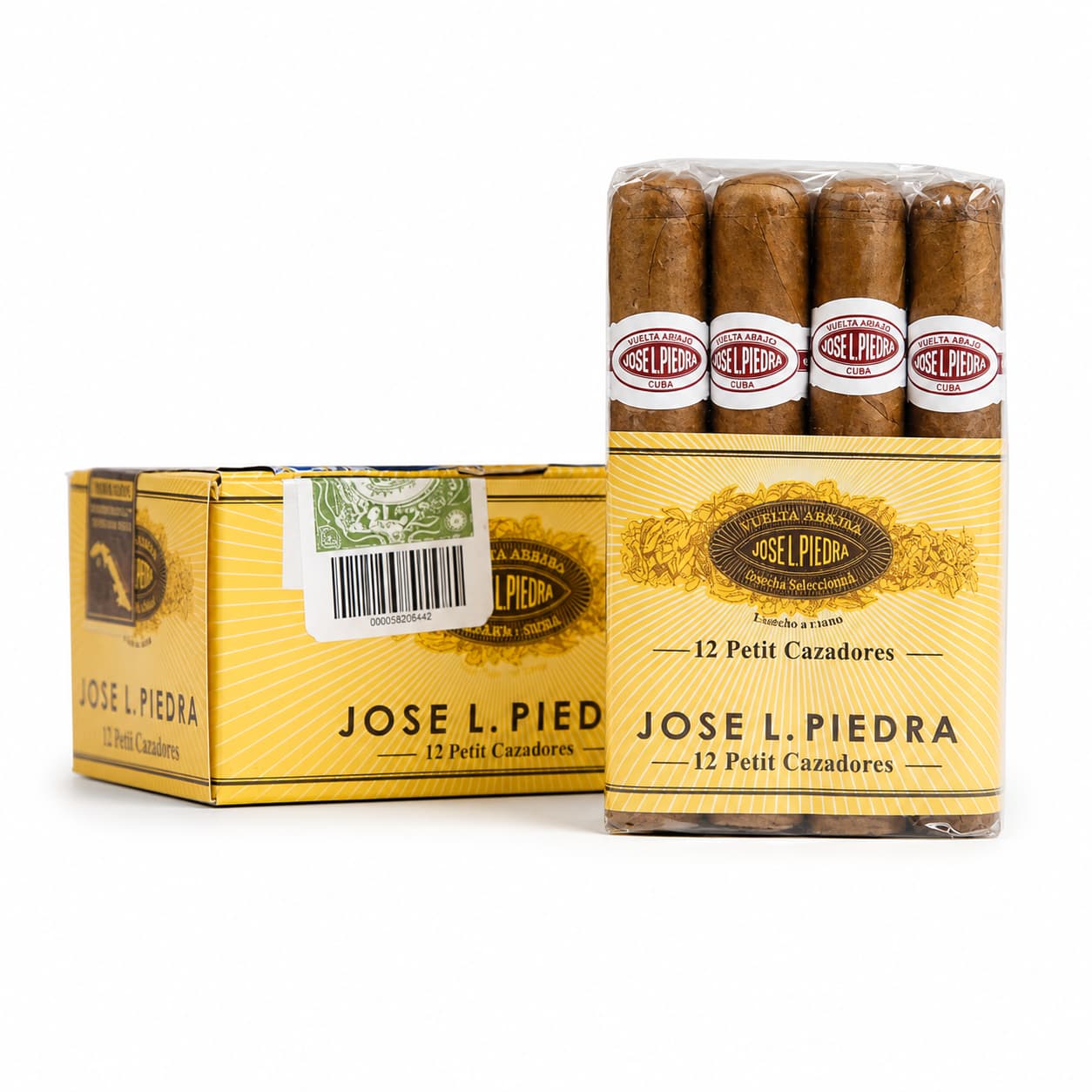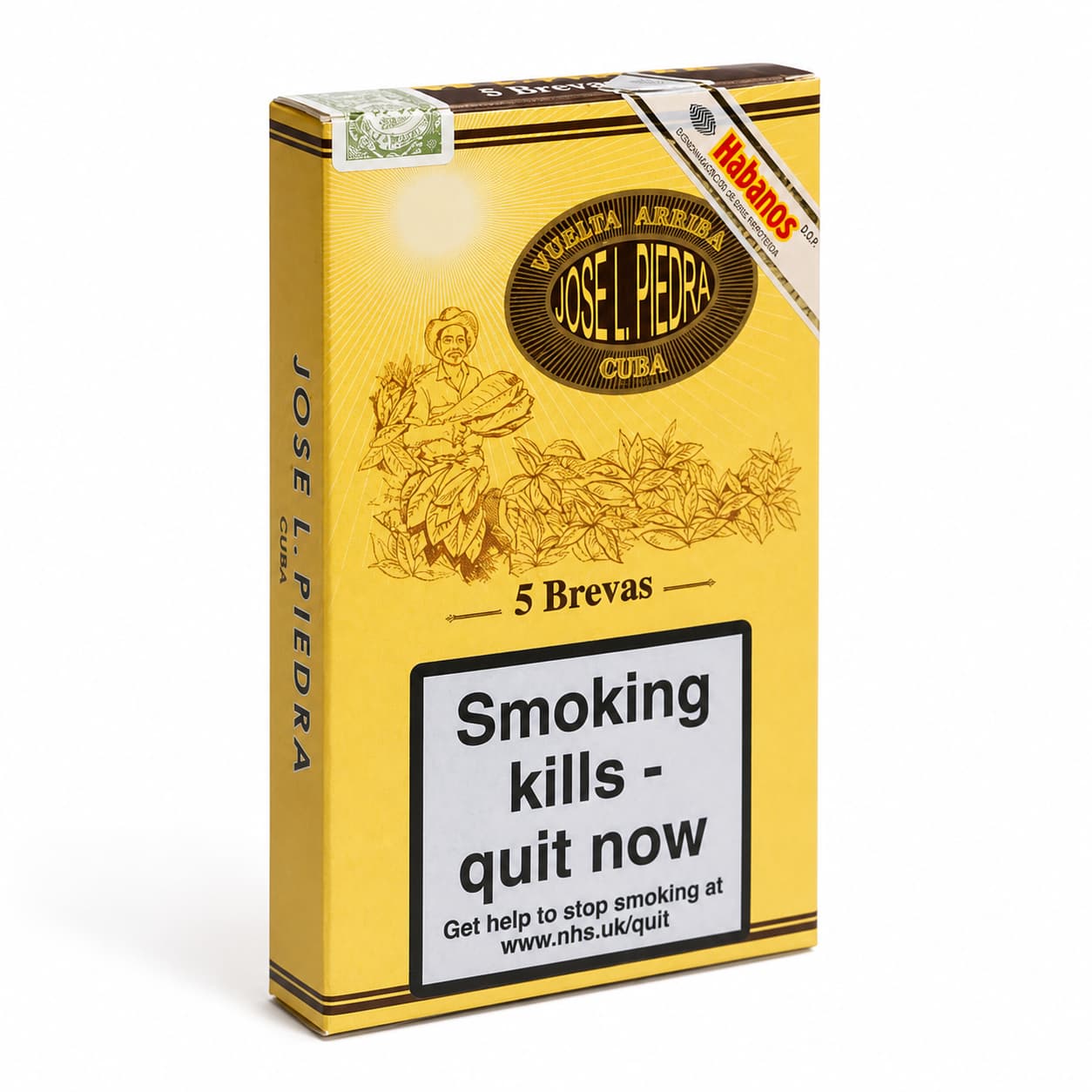

Jose L Piedra Brevas
José L. Piedra Brevas






At a glance
Jose L Piedra Brevas
There's a particular kind of honesty in a cigar that never pretends to be something it isn't. Walk through the tobacco fields of the Remedios region and you'll find it—the unvarnished character of Cuban tobacco grown in soil that demands respect but gives generously to those who understand its nature. The José L. Piedra Brevas carries that same straightforward dignity, a working cigar for people who'd rather spend their time smoking than posturing.
| Specification | Details |
|---|---|
| Vitola | Brevas JLP |
| Ring Gauge | 42 |
| Length | 5¼" (133mm) |
| Factory | Cuba (Handmade) |
| Strength | Medium |
| Wrapper | Cuban (Vuelta Arriba) |
| Box Count | Pack of 5, Bundle of 12 |
The Piedra family began rolling cigars in 1880, building their reputation not in the celebrated fields of Pinar del Río, but in the rougher, more untamed terrain of Remedios. This is tobacco country with a different accent—bolder, earthier, less refined but no less compelling. For over a century, José L. Piedra has served as the cigar that Cubans actually smoke, the bundle tucked into shirt pockets and saddlebags, the companion to long afternoons and hard work. The Brevas vitola, released in its current handmade form after decades as a machine-made staple, represents something increasingly rare: an authentic Cuban experience at a price point that invites daily enjoyment rather than special-occasion hoarding.
The short-filler construction tells you everything you need to know about this cigar's priorities. Rather than whole leaves running the length of the cigar, the filler consists of chopped tobacco—scraps from the rolling table, yes, but scraps from some of Cuba's most distinctive tobacco. This is the tradition of thrift that defined Cuban smoking culture long before export markets demanded pristine presentation. The draw tends to be effortless, the burn consistent, and the flavor profile benefits from the mingling of different leaf portions in every puff.
First Light
The initial draws announce themselves with dry earth and raw cocoa—a combination that feels less like a flavor and more like a place. There's a distinctive mineral quality here, the taste of Remedios soil translated through fire. The wrapper, likely from the same Vuelta Arriba region as the filler, contributes a faint sweetness that tempers the rustic core. White pepper prickles at the retrohale, present but never overwhelming. This is an honest beginning, unvarnished and direct.
The Journey
Into the second third, the Brevas finds its rhythm. Coffee bean emerges more prominently, moving from background accent to lead voice. The earthiness deepens into something resembling wet clay or fresh-turned soil after rain—a quality that might sound unappealing on paper but proves deeply satisfying in practice. A creaminess develops around the edges, softening the rougher elements without obscuring them. The construction, despite the short-filler format, demonstrates admirable consistency. The ash holds surprisingly well, stacking in firm gray layers.
The Finale
The final act brings everything into sharper focus. The cocoa notes intensify, darkening toward baker's chocolate with just a suggestion of bitterness that works in the cigar's favor. Walnut skin joins the profile, adding a tannic edge that complements the persistent earth. The pepper from the opening returns, now more integrated, a warmth that spreads across the tongue rather than a sharp spike. The finish lingers with coffee grounds and cedar, a modest but genuine conclusion to a smoke that has made no grand promises but delivered entirely on what it offered.
Who It's For
The Brevas answers a question too few cigars bother to ask: what do you smoke on a Tuesday? This is the cigar for the commuter who wants twenty minutes of genuine Cuban character between the office and home, for the gardener who deserves something honest with their afternoon break, for the aficionado who's tired of reserving their best smokes for occasions that never seem to arrive. It's a study cigar, a fishing cigar, a standing-on-the-porch-watching-the-rain cigar. Experienced smokers will appreciate its unpretentious competence; newcomers will find it an accessible entry point into Cuban tobacco without the intimidation factor of a Behike or the investment required of a Grand Reserva.
Pairing Suggestion
A café cubano—strong, sweet, and unapologetic—makes the ideal companion, its roasted bitterness echoing the cigar's coffee bean notes while its sugar smooths the rougher edges. For evening smoking, a simple aged rum on the rocks respects the Brevas's working-class soul.
 Traceable to factory and harvest year · Duty Free Authentic Cuban
Our Promise
Every cigar guaranteed authentic Habanos — traceable to factory and harvest, humidified, shipped duty free.
Our guarantee →
Perfect pairings

You may also like