
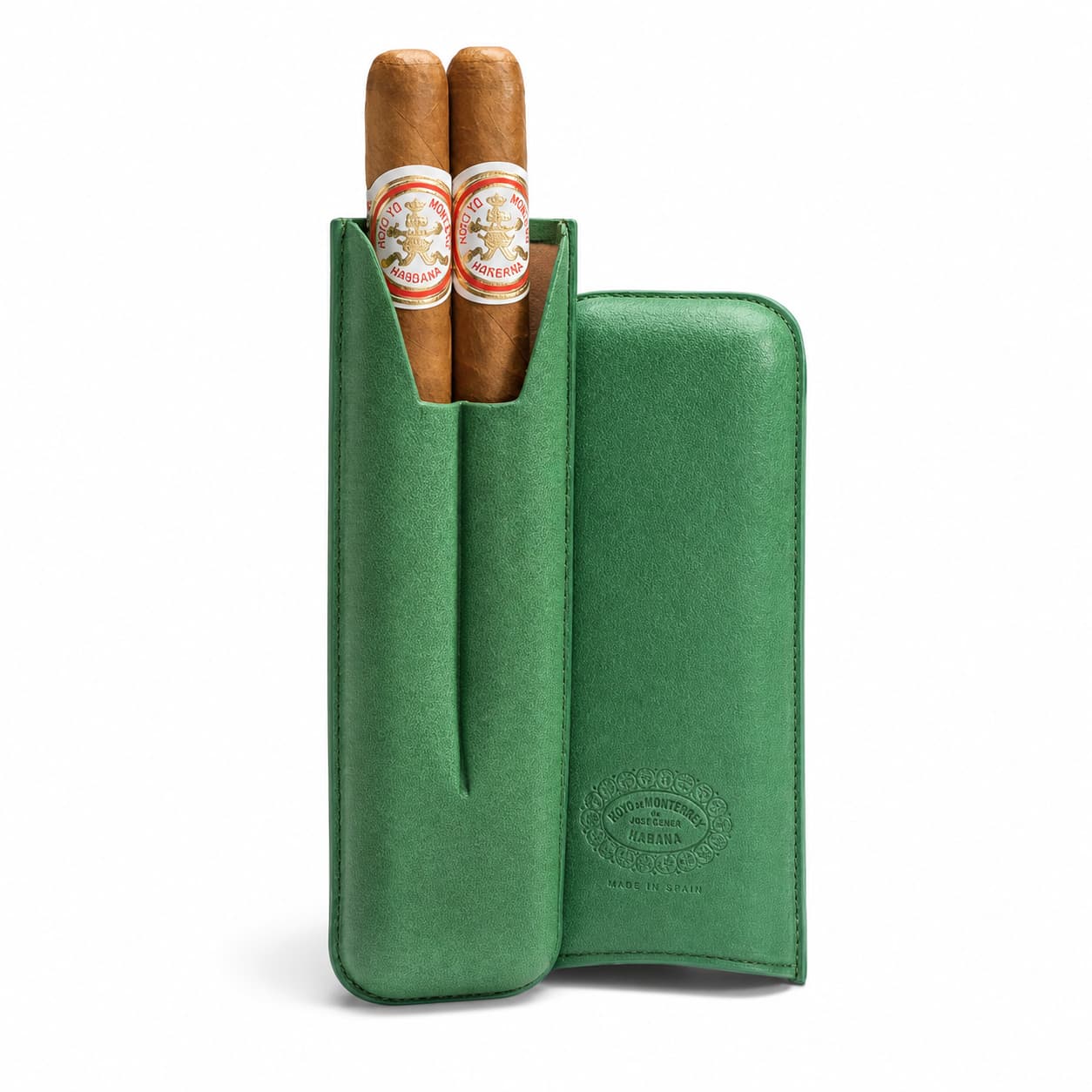
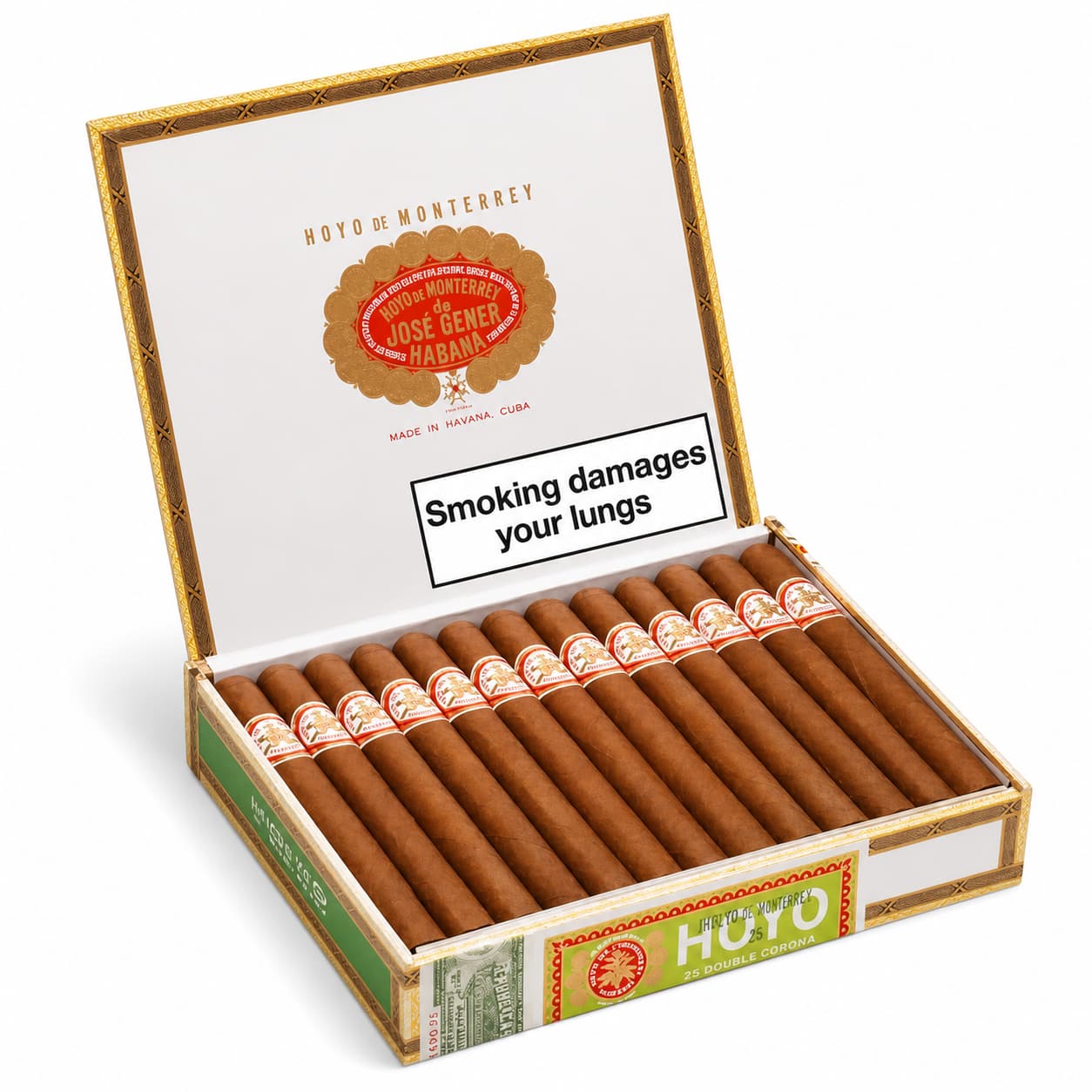
Hoyo De Monterrey Double Leather Cigar Case with Two Double Corona Cigars
There is a particular kind of anticipation that comes from unsheathing a cigar from fine leather—the quiet whisper of the case opening, the reveal of two perfectly preserved Double Coronas waiting in their tailored cradle. This is not merely packaging; it is a statement of intent, a prelude to the hours of contemplation that follow.






At a glance
There is a particular kind of anticipation that comes from unsheathing a cigar from fine leather—the quiet whisper of the case opening, the reveal of two perfectly preserved Double Coronas waiting in their tailored cradle. This is not merely packaging; it is a statement of intent, a prelude to the hours of contemplation that follow.
| Attribute | Details |
|---|---|
| Vitola | Prominentes (Double Corona) |
| Ring Gauge | 49 |
| Length | 194mm (7.6") |
| Factory | Cuba (Habanos, Vuelta Abajo) |
| Strength | Mild to Medium |
| Wrapper | Cuban |
| Box Count | Standard |
Hoyo de Monterrey has long occupied a singular place in the Cuban pantheon. Founded in 1860 by José Gener y Batet, the brand takes its name from its original plantation—literally "the hole of Monterrey," a fertile depression in the Vuelta Abajo region where the soil conditions produced tobacco of uncommon delicacy. Where other Cuban marques built their reputations on power and intensity, Hoyo chose a different path: refinement, nuance, the gentle art of restraint. The Double Corona, one of the most commanding formats in the traditional Cuban vitolario, might seem an unlikely vessel for such a mild-mannered philosophy. Yet therein lies the genius. The extended length allows Hoyo's characteristic elegance to unfold at an unhurried pace, revealing layers that a shorter format would rush past. The leather case presentation elevates the experience further—two cigars meant to be shared or savored across two separate occasions, protected in a vessel that speaks to the ritual of smoking as much as the smoke itself.
First Light
The initial draws introduce themselves with characteristic Hoyo grace—no aggression, no bluster, just the immediate presence of dry cedar and a subtle earthiness that suggests forest floor after rain. The draw is open without being loose, a testament to the handmade construction that defines the marca. There is a whisper of cream on the retrohale, barely perceptible, like the memory of sweetness rather than sweetness itself. The burn establishes itself evenly, a straight black line that promises consistency.
The Journey
Past the first inch, the Double Corona begins to reveal its true ambition. The cedar note deepens and is joined by raw cocoa—unsweetened, almost chalky in its authenticity. A roasted coffee bean character emerges on the finish, lingering between draws. The smoke texture remains silky throughout, coating the palate without weight. What makes this format special becomes apparent: the extended length allows each flavor transition to occur naturally, without the pressure of a clock. A faint nuttiness appears around the midpoint, hazelnut perhaps, woven into the existing tapestry rather than disrupting it. The strength remains firmly in the mild-to-medium range, never demanding attention but always rewarding it.
The Finale
The final third brings a quiet intensification—not of strength, but of expression. The cocoa note sweetens slightly, as if the heat has finally coaxed something more yielding from the tobacco. The cedar recedes to a supporting role, allowing leather and a trace of honey to emerge. The finish extends, each draw leaving a pleasant resonance that invites the next. There is no harshness at the end, no desperate final gasp—just a gradual, dignified conclusion befitting a cigar that has never felt the need to shout.
Who It's For
This presentation speaks directly to the thoughtful smoker—the one who understands that a Double Corona is not a cigar to be rushed but an occasion to be created. It is ideal for the long afternoon when time stretches ahead like the cigar itself, unburdened by obligation. The leather case makes this a natural choice for the traveling aficionado or as a considered gift for someone who has already learned to appreciate subtlety over spectacle. These are cigars for the patient, for those who find pleasure in watching a story unfold rather than demanding immediate gratification.
Pairing Suggestion
A aged Dominican rum or a well-rested cognac will mirror the cigar's gentle complexity without overwhelming it. For the traditionalist, a cup of Cuban coffee—taken black—will accentuate the cocoa and roasted notes that define the second act.
 Traceable to factory and harvest year · Duty Free Authentic Cuban
Our Promise
Every cigar guaranteed authentic Habanos — traceable to factory and harvest, humidified, shipped duty free.
Our guarantee →
Perfect pairings

You may also like
Related Articles
Hoyo de Monterrey
Hoyo de Monterrey Band History and Variations The decorative bands adorning Hoyo de Monterrey cigars have undergone numerous transformations...
Cigar InfoHoyo de Monterrey Bonitas
Hoyo de Monterrey Bonitas The Hoyo de Monterrey Bonitas represents a fascinating chapter in Cuban cigar history—a vitola that graced humidors for...
Cigar InfoHoyo de Monterrey Churchills
Hoyo de Monterrey Churchills The Hoyo de Monterrey Churchills stands as one of the most distinguished vitolas in the brand's storied history. Named...